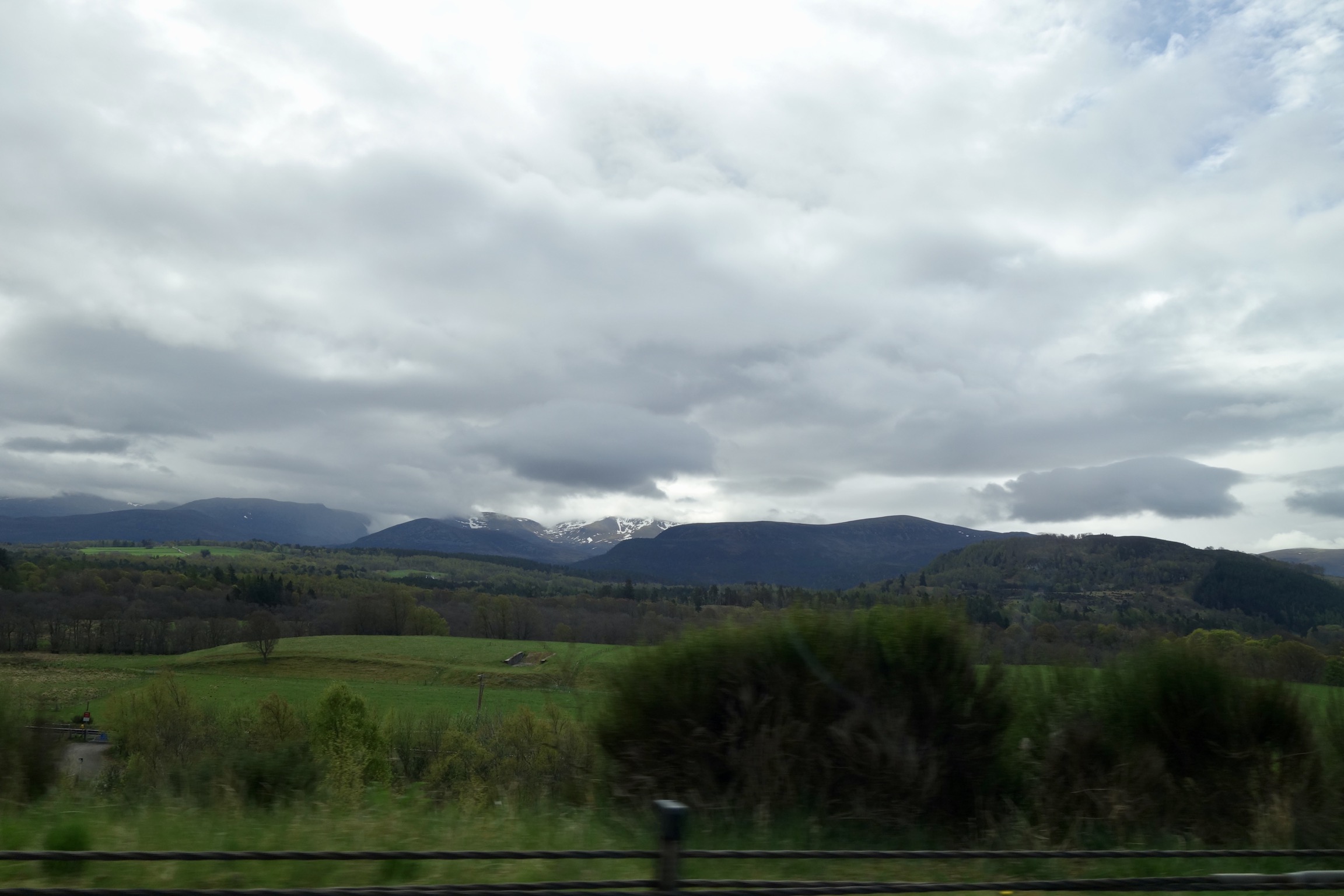
We said “farewell for now” to the Highlands, heading down to Carlisle, with a stop at Rosslyn Chapel.
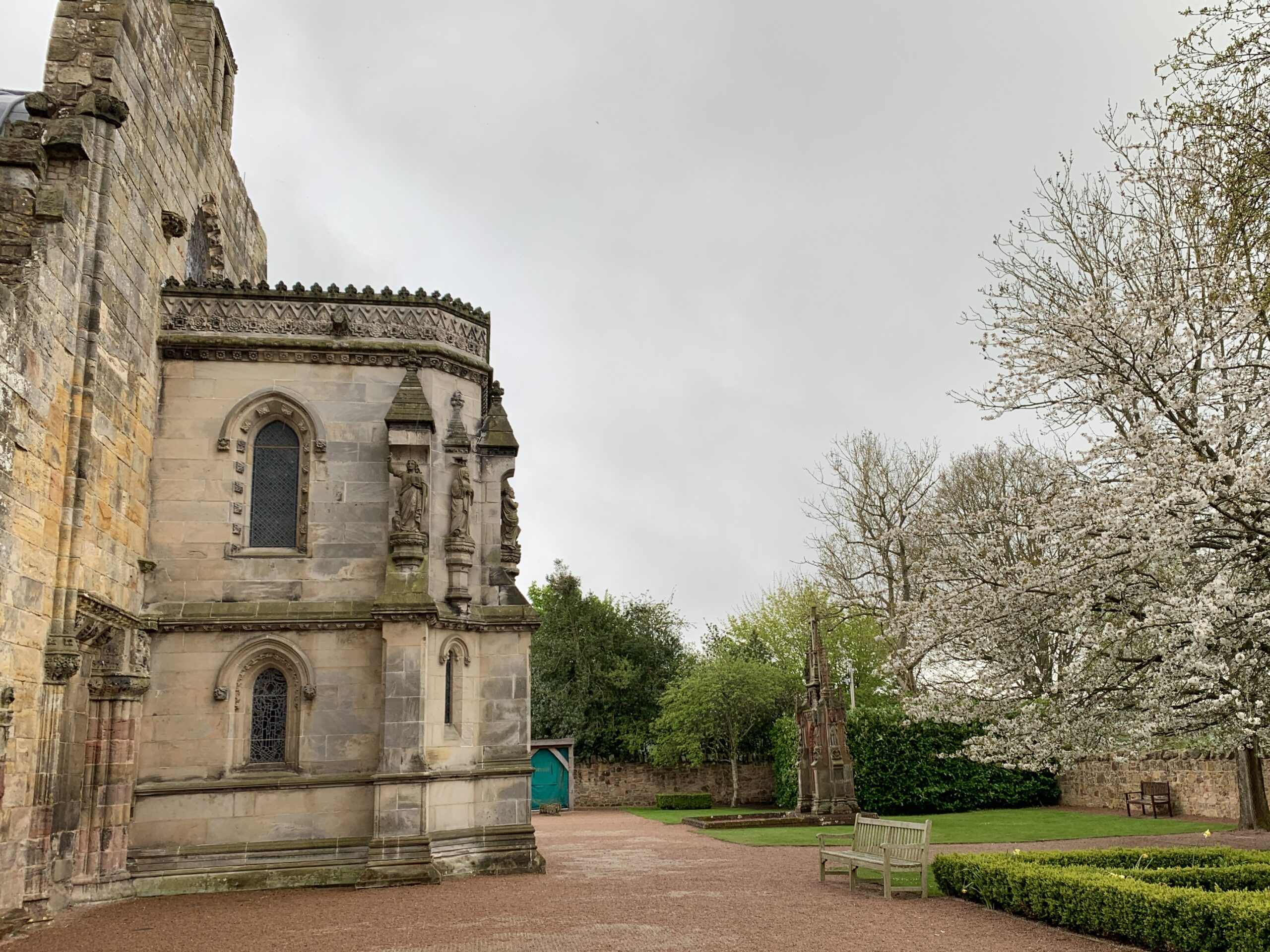
Rosslyn Chapel
An architectural curiosity, Rosslyn Chapel achieved notoriety with the Da Vinci Code and multiplied its tourist trade five-fold. The money has been very welcome, as the chapel was falling apart at the time. The purported links to the usual “hidden history” suspects (Templars, Masons, etc.) is nonsense. (Do people not understand that fiction is, well, fiction?) But the structure and its art fascinate anyway.
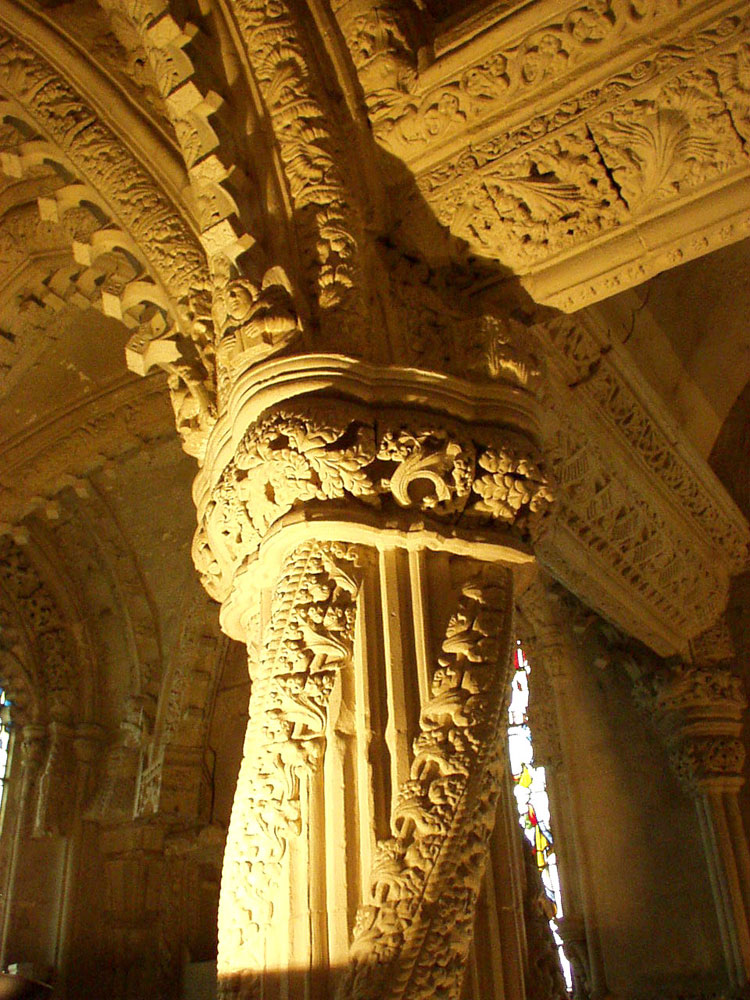
Photography is not permitted inside, but their website has a 360-tour of the highly decorated interior, as well as a good selection of close-up photos.
The extensive carvings reminded me of the swirling foliage and elaborate filigree work in late medieval manuscripts.
Hooey and hokum
The docent repeated the “just-so” stories popularized in the Da Vinci Code. Much is made of the story behind the so-called “Apprentice Pillar,” a story that is actually a commonplace tale with many instances throughout Europe; scarcely unique to Rosslyn or truer there than it is elsewhere. Wisely, she refrained from asserting the truth of these tales and interpretations, using phrases like “some say” or raising questions, as does the site, about what is depicted in certain carvings, such as “Could these carvings of Indian corn be proof that Scottish knights reached North America first?”
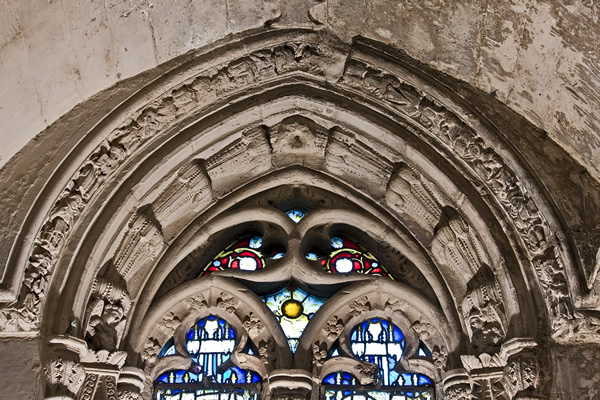
Presuming, of course, that it was even intended to represent a plant at all.
To which I answer, no, absolutely not, for many more reasons than I have time to go into now. But here are a couple of commonsense objections to identifying certain carvings as maize or aloe plants. First, the purported maize plants don’t look like any corn I’ve ever seen, and seeing the aloe as such is also a stretch. Second, (shock! amazement!), the carvings do however look like some very common motifs in medieval art, motifs found in wood carvings and manuscript illuminations, as well as on other stonework.
The Real Mystery of Rosslyn Chapel
The carvings are amazing not because they document some modern fantasies about Templars and pre-Columbian voyages: they are noteworthy because they exuberantly replicate in stone the delicacy and detail of designs seen principally in medieval paintings and manuscripts. The excess, the very profusion of designs is a wonder. Many highly skilled masons and artist worked for decades producing the exquisite work on display in the chapel.
Perhaps the greatest mystery is the faith that inspired the original Sir William St Clair to give carte blanche to such a project: an elaborate chapel to house several priests and choristers whose principal job was to pray for the souls of their patron and his family.
The Reformation saw the destruction of the chapel’s altars, and it was neglected until the late 18th century. It was still little more than a ruin when visited by Dorothy Wordsworth and her brother, William, who wrote this sonnet about it:
Composed at Roslin Chapel during a Storm
The wind is now thy organist; a clank
(We know not whence) ministers for a bell
To mark some change of service. As the swell
Of music reached its height, and even when sank
The notes, in prelude, Roslin! to a blank
Of silence, how it thrilled thy sumptuous roof,
Pillars, and arches, not in vain time-proof,
Though Christian rites be wanting! From what bank
Came those live herbs? by what hand were they sown
Where dew falls not, where rain-drops seem unknown?
Yet in the Temple they a friendly niche
Share with their sculptured fellows, that, green-grown,
Copy their beauty more and more, and preach,
Though mute, of all things blending into one.
William Wordsworth, 1803
From the sublime to the banal
Not quite two hours later, we reached our lodging for the night, a Premier Inn, outside Carlisle. We do not understand the popularity of this chain; England must lack the plethora of decent budget hotels we have in the US. Its chief virtue was that it was right off the M-6. Its second virtue was that we would be there for only one night.