St Martin-in-the-Fields
Took a taxi (Black Cab, of course) to the National Gallery with a chatty driver, who had severe opinions about the pedestrianization of many London areas, because construction creates traffic jams. There really is no need for private cars in densely populated cities when you have good public transport and taxis. We got out at St Martin-in-the-Fields, where we popped in for a moment before crossing the street to the gallery.
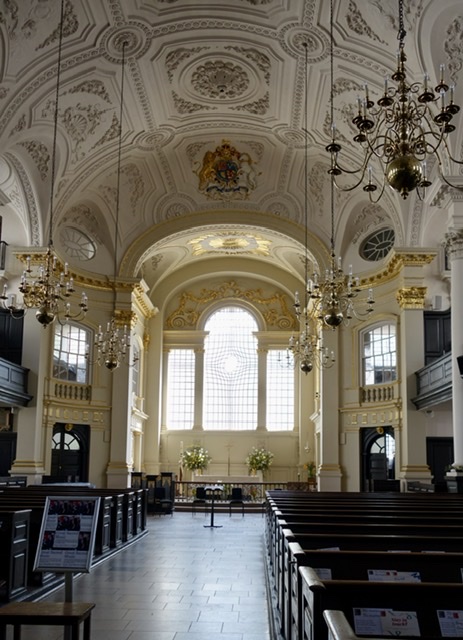
Anything that requires walking is generally a good practice in life, and a necessary one for adapting to the time you’re in. Wandering through museums and galleries is the perfect pastime for emerging painlessly from jet lag.
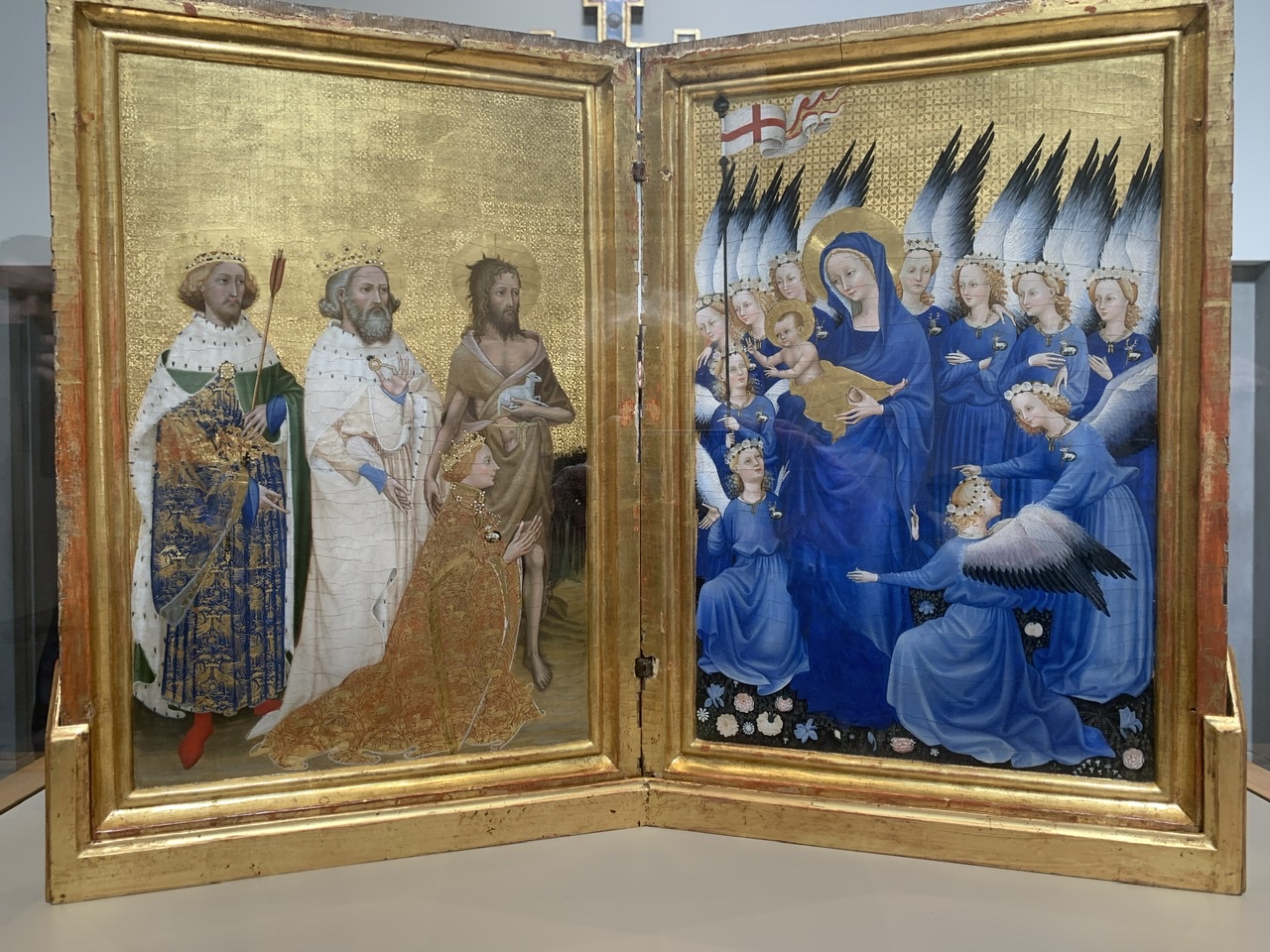
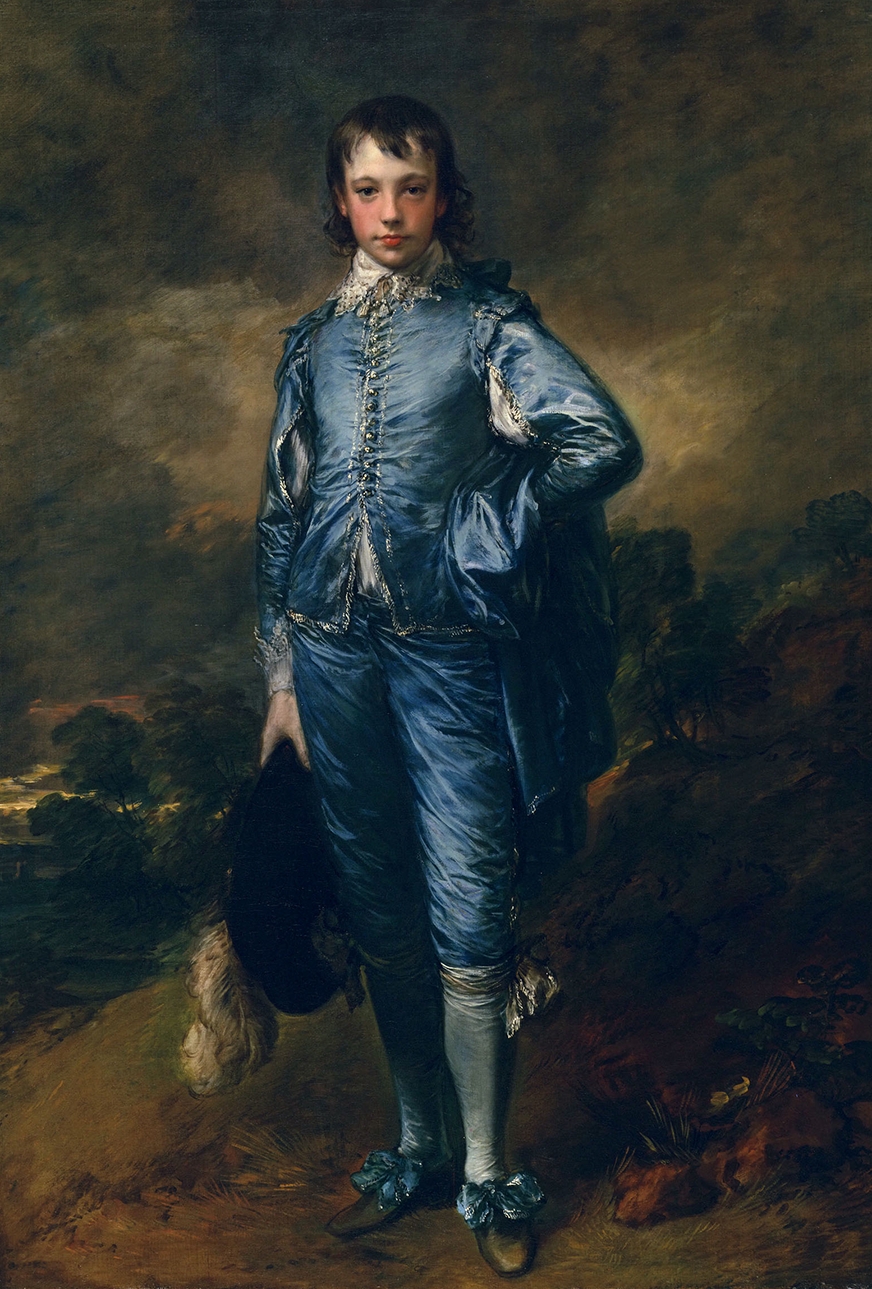
The National Gallery has a good collection of egg tempera paintings, including the exquisite Wilton Diptych and several Botticellis. It also had an exhibit of Rafael works, on loan from several galleries, as well as a loan of Blue Boy.
Rafael exhibit
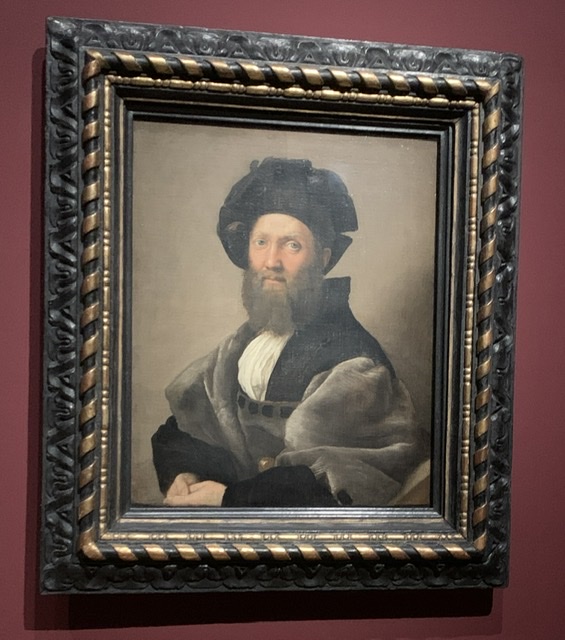
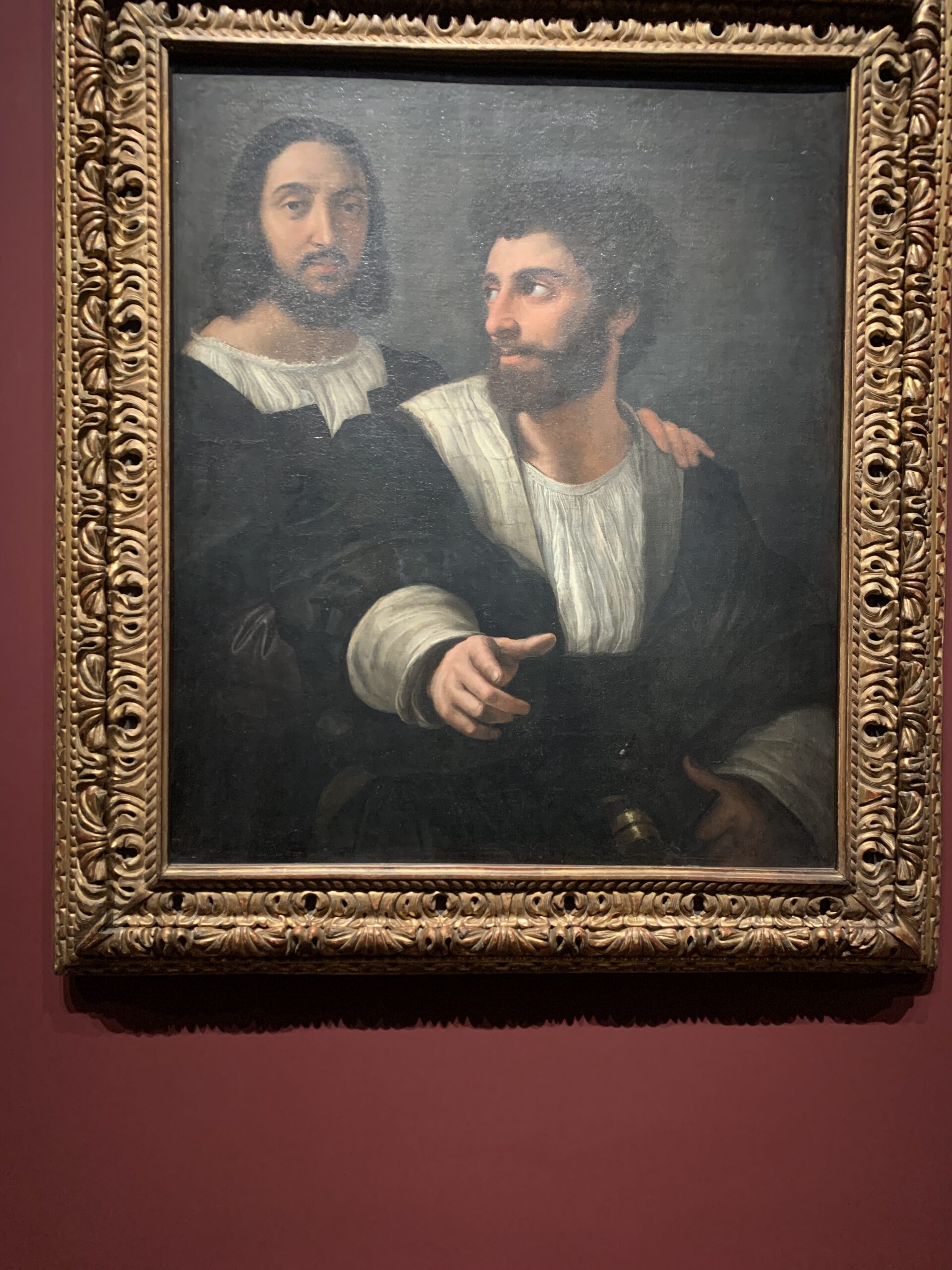
For years, Rafael held no appeal. I knew him chiefly through his Madonnas, which felt insipid and sentimental. Can’t say this exhibit, which drew together Raphael paintings from all over Europe, changed my mind about his religious paintings, though one must admire his sheer mastery of technique. However, a few years ago, at the Louvre, his portrait of Balthazar Castiglione (who wrote The Book of the Courtier) stopped me in my tracks. As did his Self Portrait with a Friend, also from the Louvre.
My photos here are not particularly good, too much glare and bad angles, but I’ve linked to better versions.
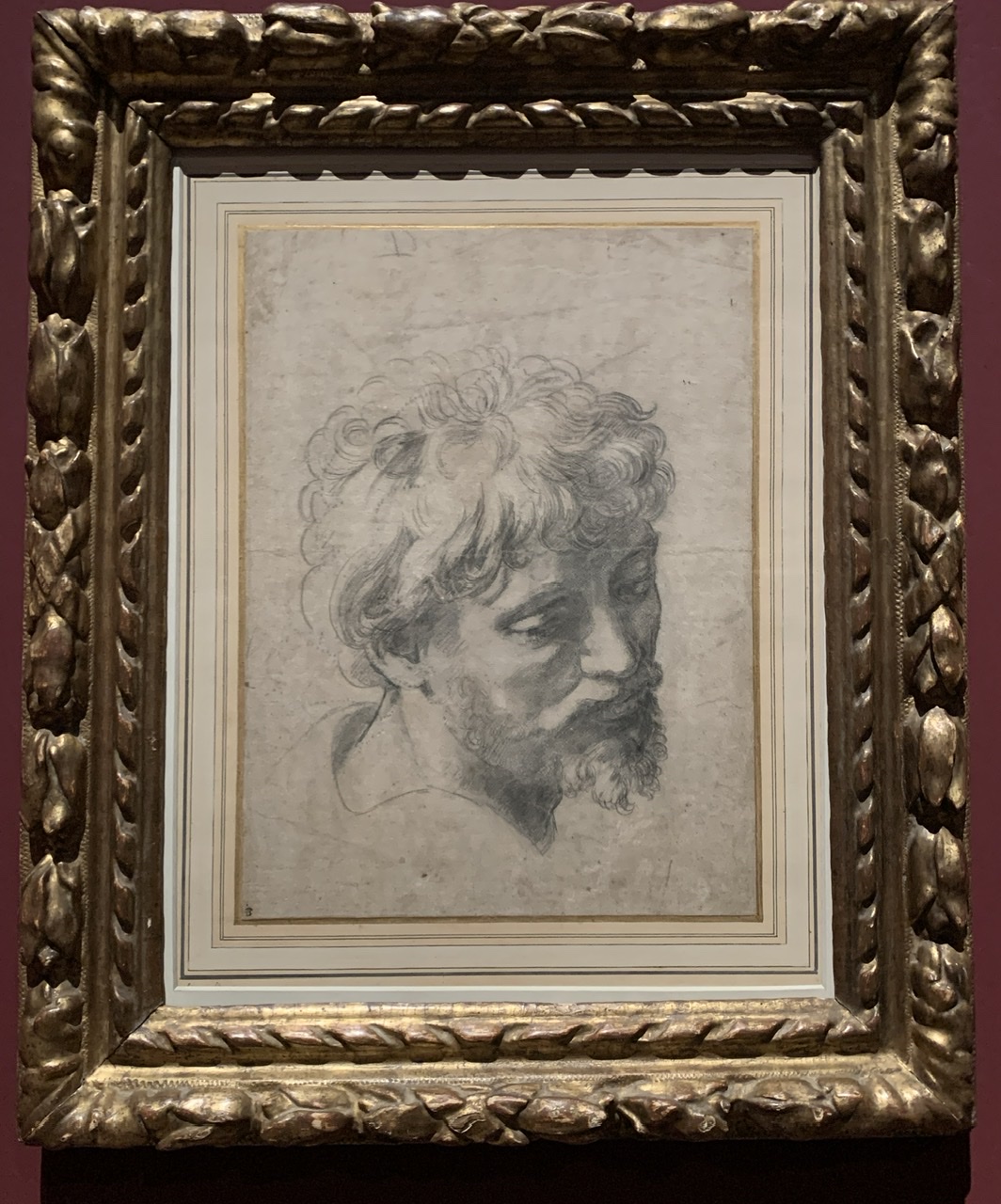
His drawings also captivated me.
Egg Tempera paintings
As my painting friends know, egg tempera was the principal medium for painting in Europe until about 1500 (which conveniently and conventionally is the end of the Middle Ages), when oils ensorcelled the world of art and became the dominant medium for painting.
I wanted to take in as much as I could, both to appreciate and to learn. I learned, for instance, this factoid: poplar was the preferred wood for panels. I found that interesting because in New Mexico, cottonwood, a related wood, was traditionally the preferred material for bultos (statues) and retablos (panel paintings).
Here are a few of the paintings I wanted to see.
Wilton Diptych
Botticelli’s Portrait of a young man
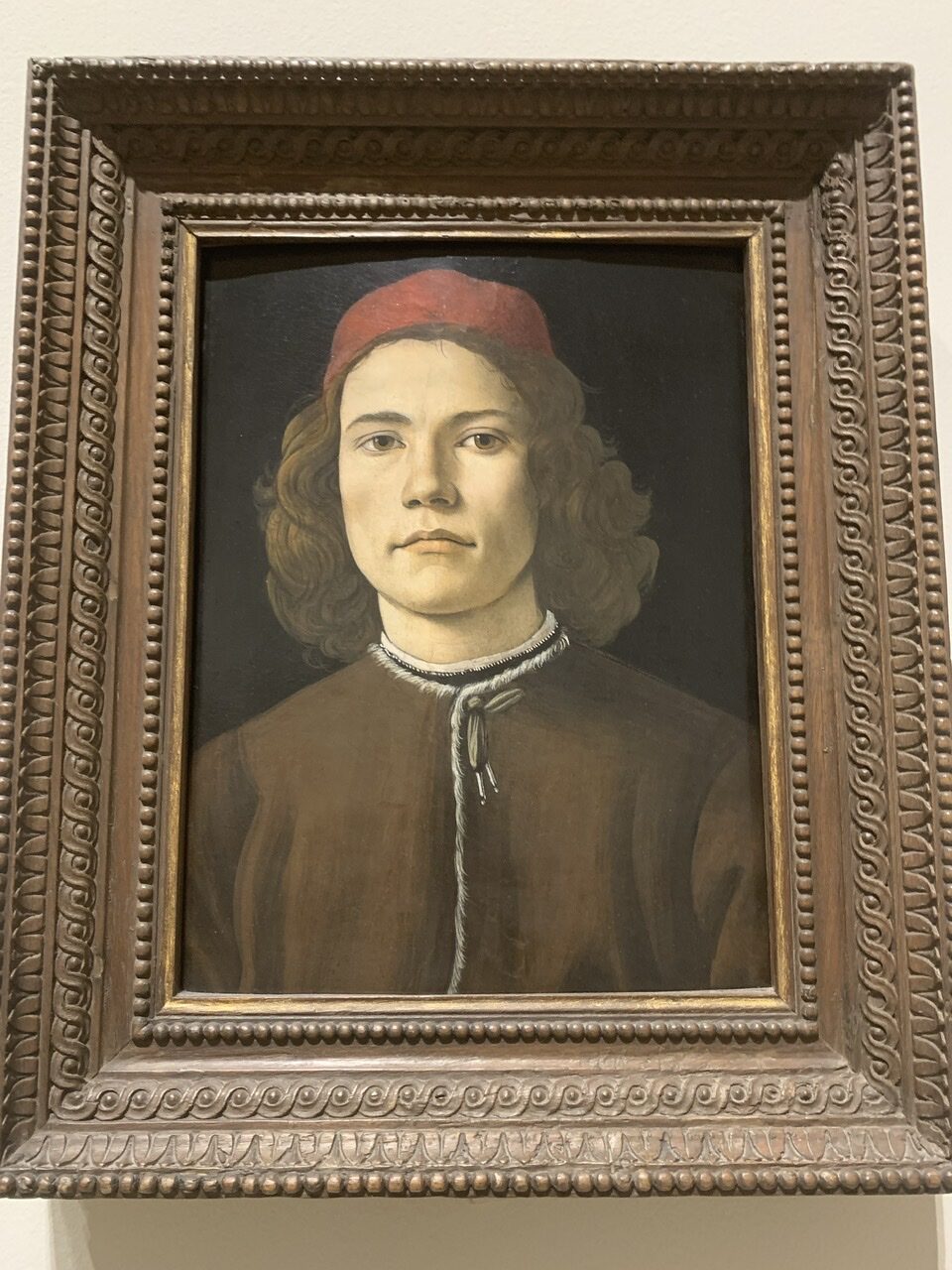
I wanted to gaze upon the original, which I am in process of copying, and to confirm that the colors in my reference photo are reasonably accurate. (They are.)
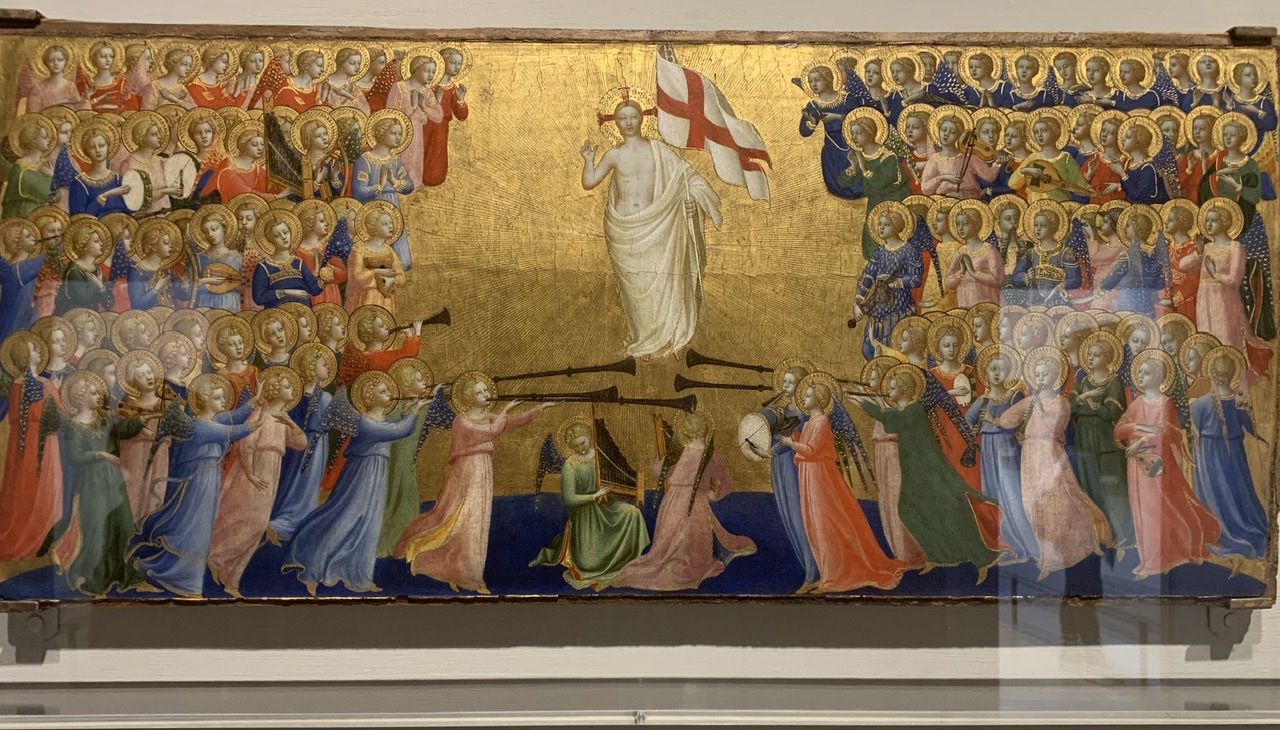
Fra Angelico’s Christ glorified in the court of Heaven
Center part of a predella (lowest part) of the altarpiece made for the high altar of San Domenico, Fiesole. The predella is long, but only a foot high. This is one of the pieces. Enlarge and admire the gilding: the detail is amazing.
I also wanted to study
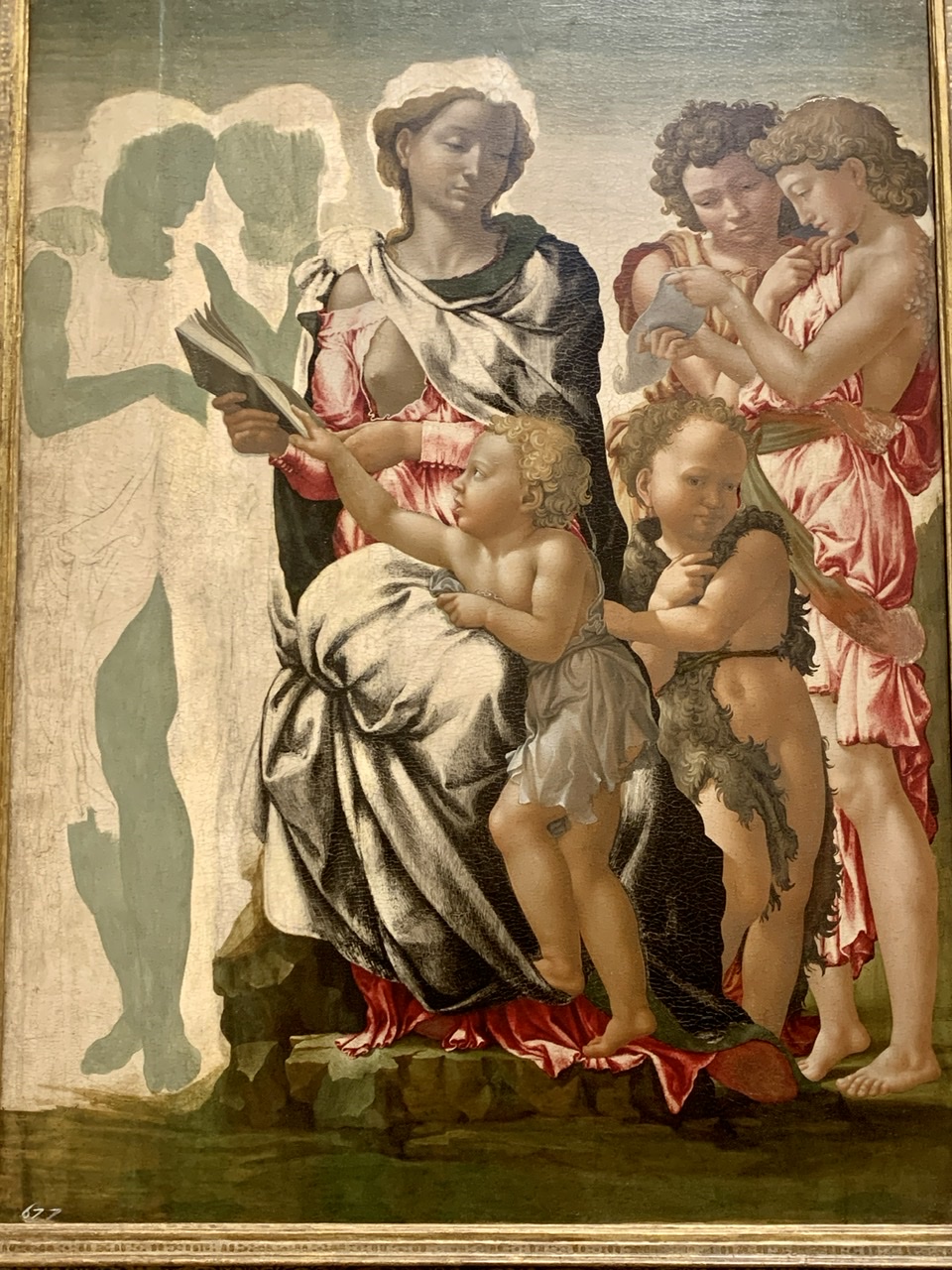
Green flesh
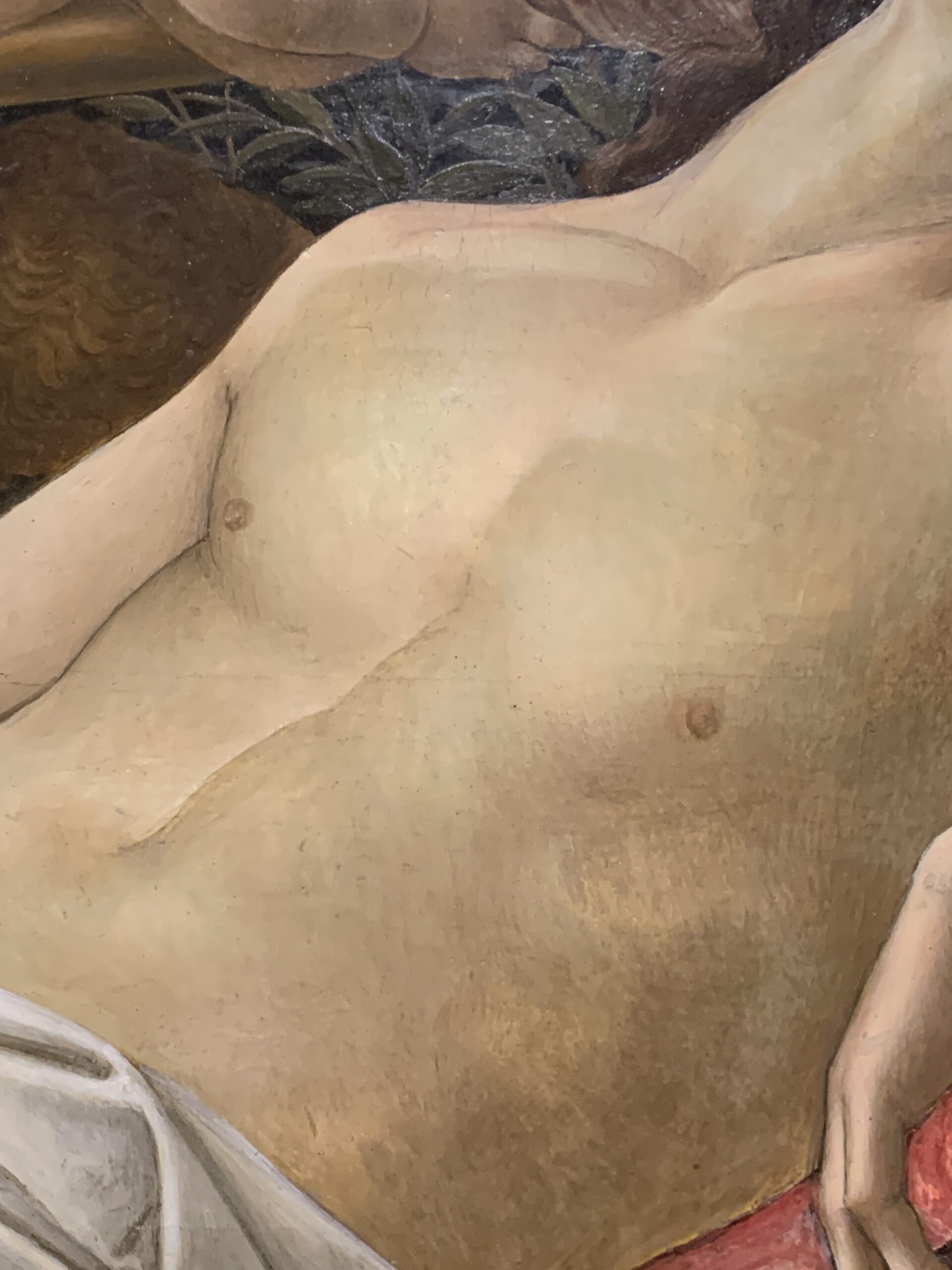
A dull green was used in most egg tempera paintings as an underpainting and modeling tint for flesh. Though Michelangelo finished his paintings in oil, he underpainted them in egg tempera, as this unfinished painting shows.
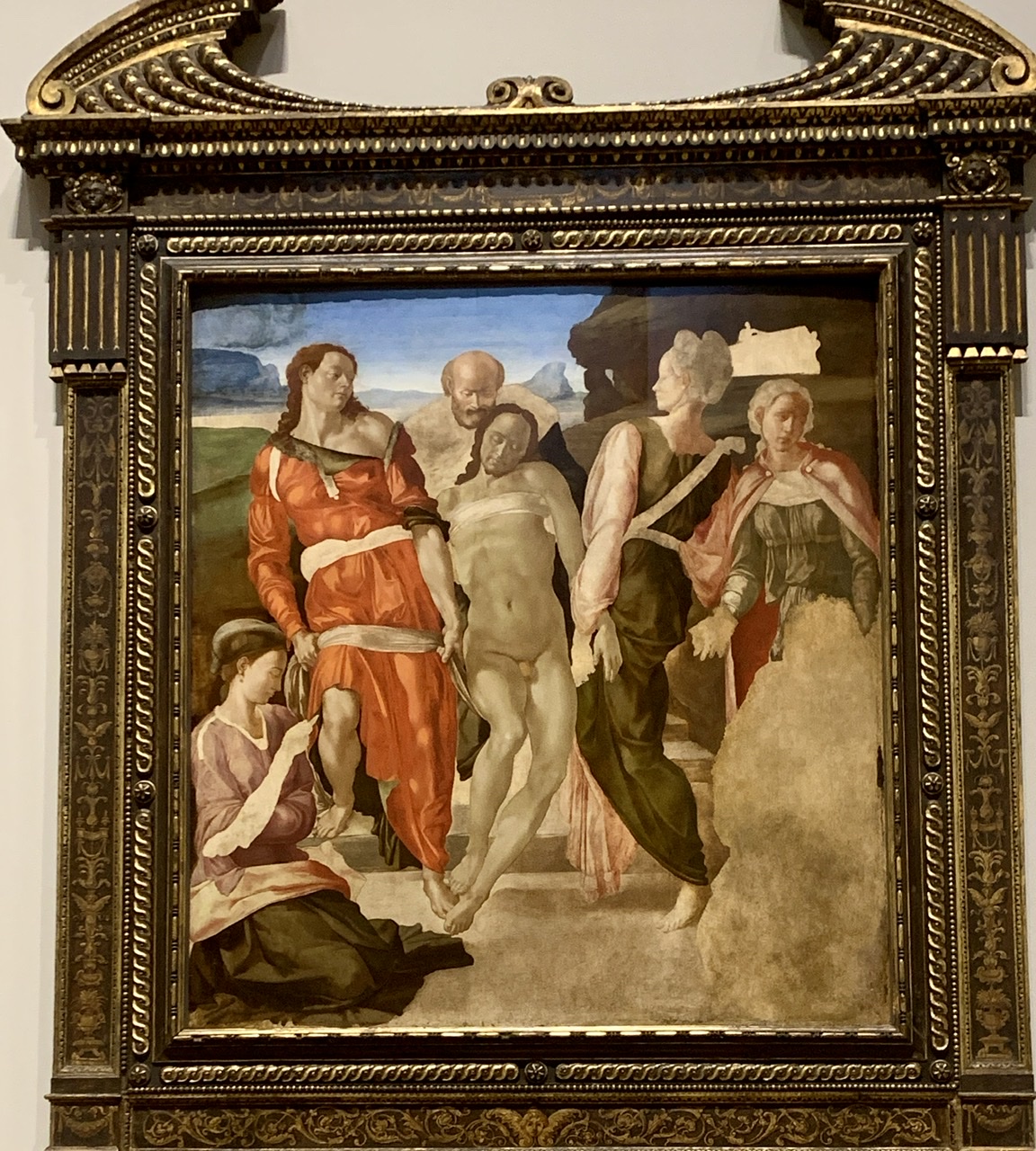
Another unfinished Michelangelo, The Entombment, shows that he learned his painting technique in egg tempera, which he has transferred to oil.
Egg tempera portraits
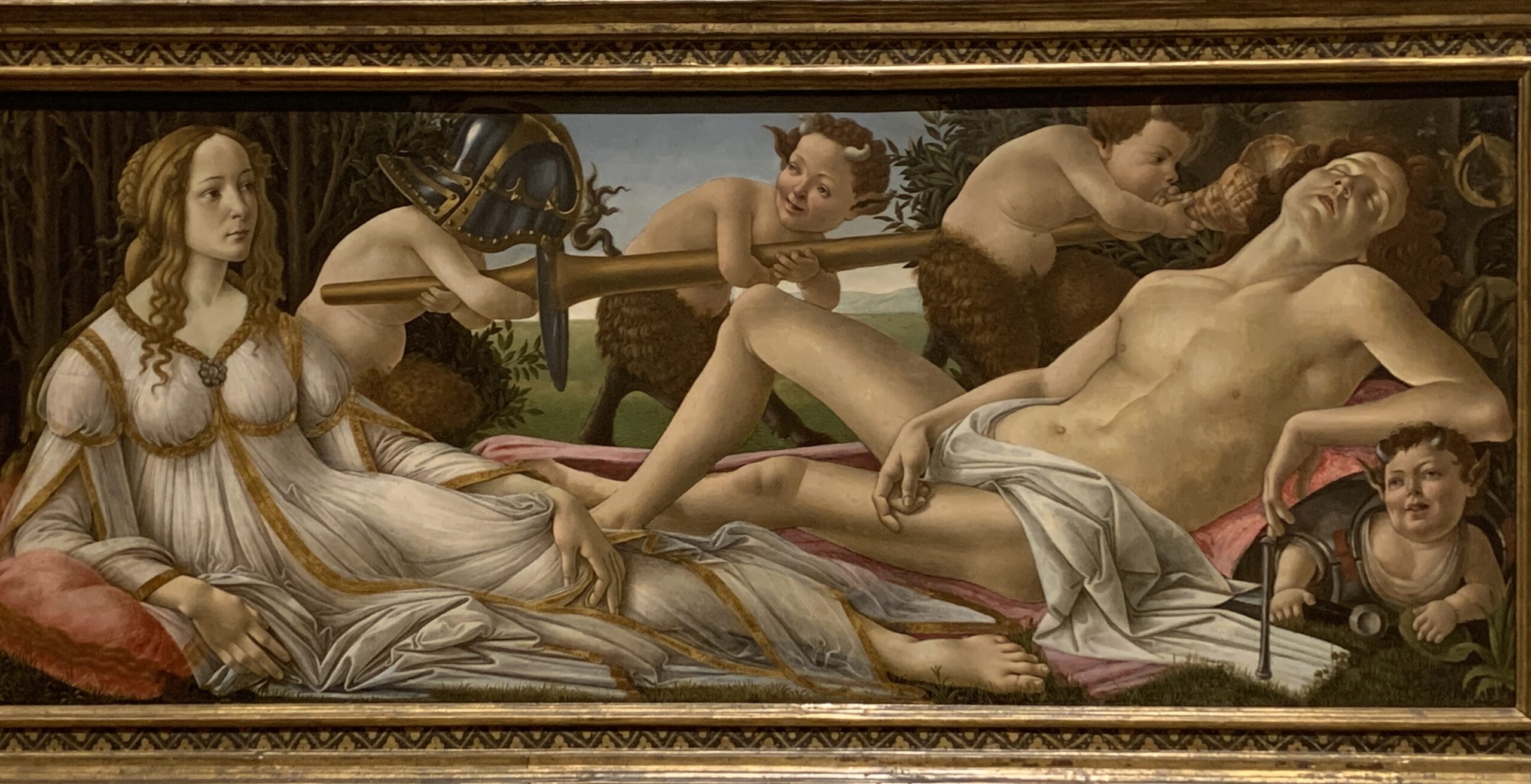
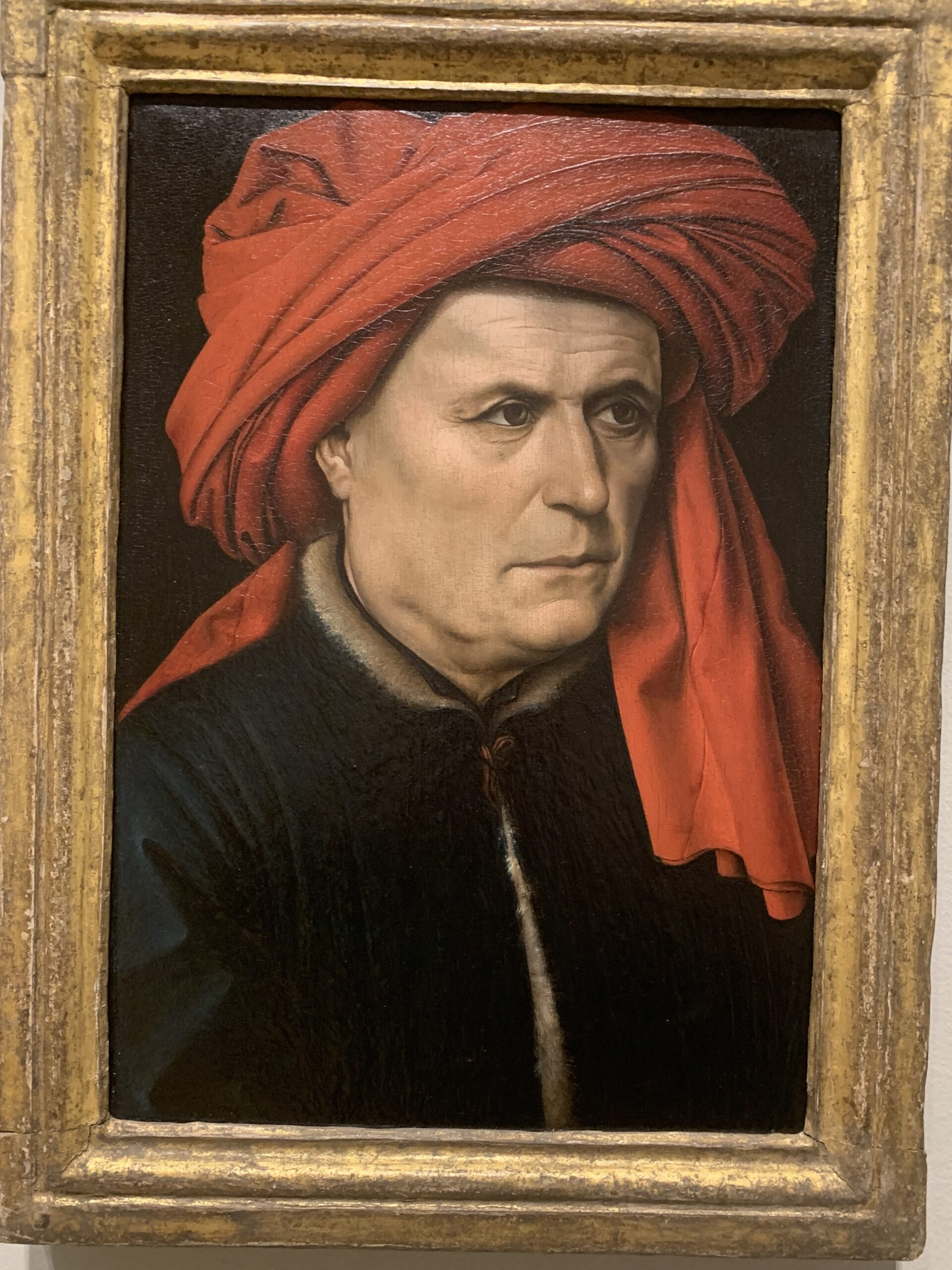
I took a lot of photos of egg tempera paintings, which I’ll try to upload someday for study. But for now, here are two portraits in egg tempera grassa (egg tempera mixed with oil).

Blue Boy
Like the Mona Lisa, Gainsborough’s Blue Boy has become a terrible cliche, difficult to see newly. Indeed, when I first saw it at the Huntington (where it’s lived for a century), I heaved a sigh of impatience, being keener to see the Ellesmere Chaucer. But this time, I could admire Gainsborough’s treatment of value, hue, shadow, light, edges lost and found, and enjoy a beautiful painting.
On we go
Trafalgar Square is pedestrianized. Uncanny warmth on what normally would be a cool April day delighted all. Coats off, we strolled the km to see the Van Gogh self-portrait exhibit at the Courthauld.