Our first full day in London, we explored the neighborhood around St Pancras and King’s Cross stations. We stayed at a nearby hotel, The Megaro, because we would be taking the train north in a few days.
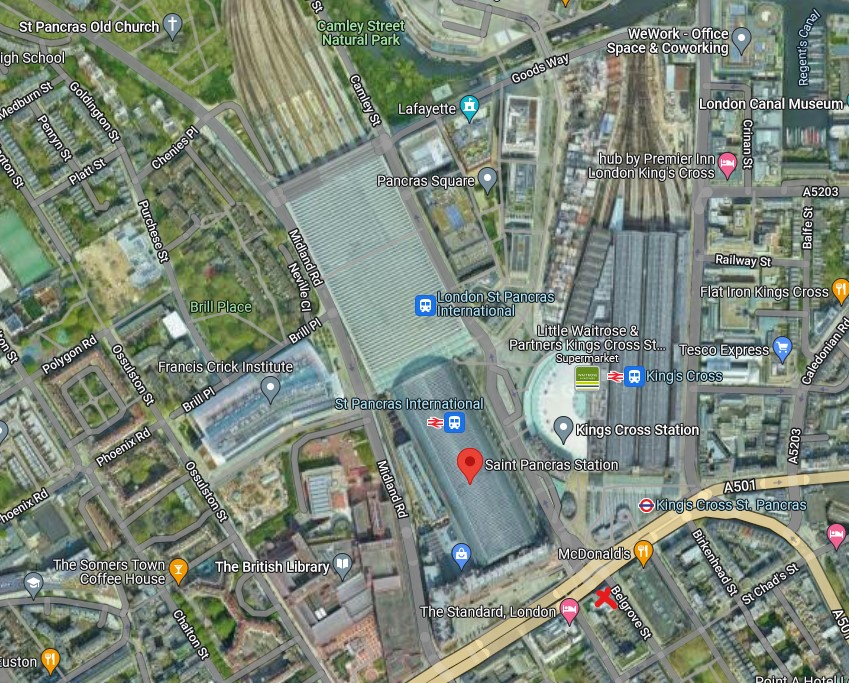
Look at upper left corner for St Pancras Old Church
St Pancras Old Church
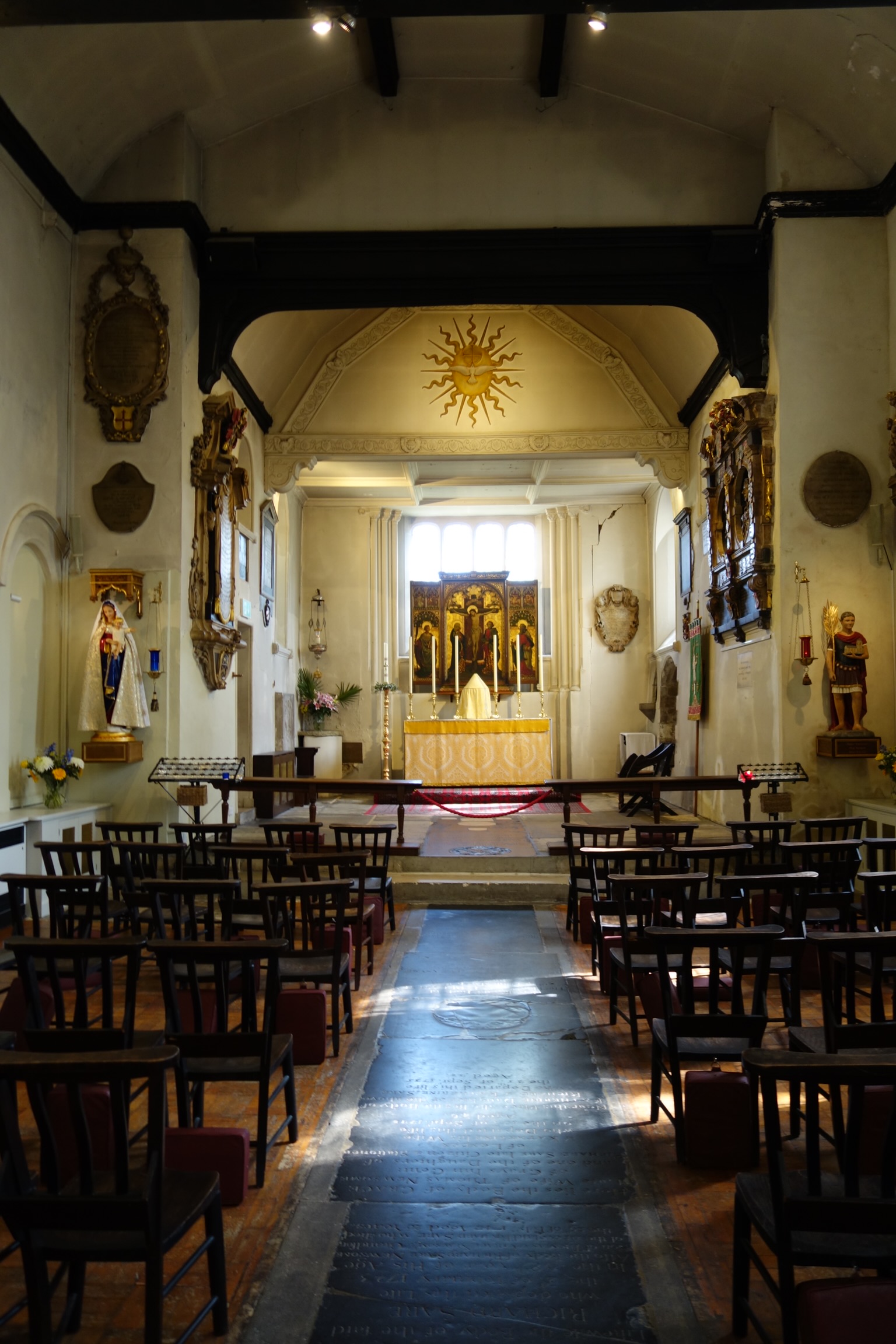
Some shrine has been here for centuries, perhaps as early as the 4th c, just after its namesake was martyred in Rome by the emperor Diocletian. A few centuries later, Augustine brought St Pancras’s relics to England and founded at least one church in his honor. The London church, originally a Norman building on perhaps Saxon foundation, has burned down, been rebuilt and reconstructed several times over the centuries.
Its graveyard was the final resting place for many Londoners, until the authorities decided in the late 19th c that the land was needed for a new railway, now connected to St Pancras and King’s Cross stations.
Old St Pancras Churchyard
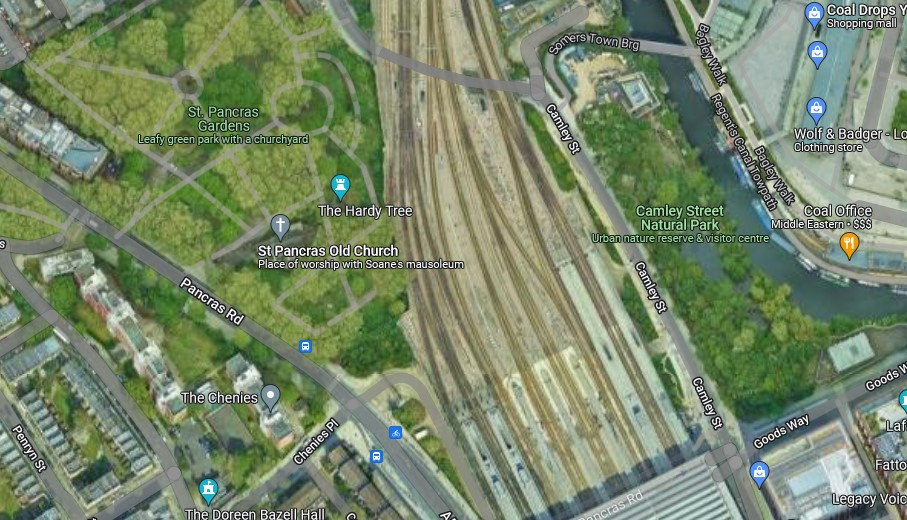
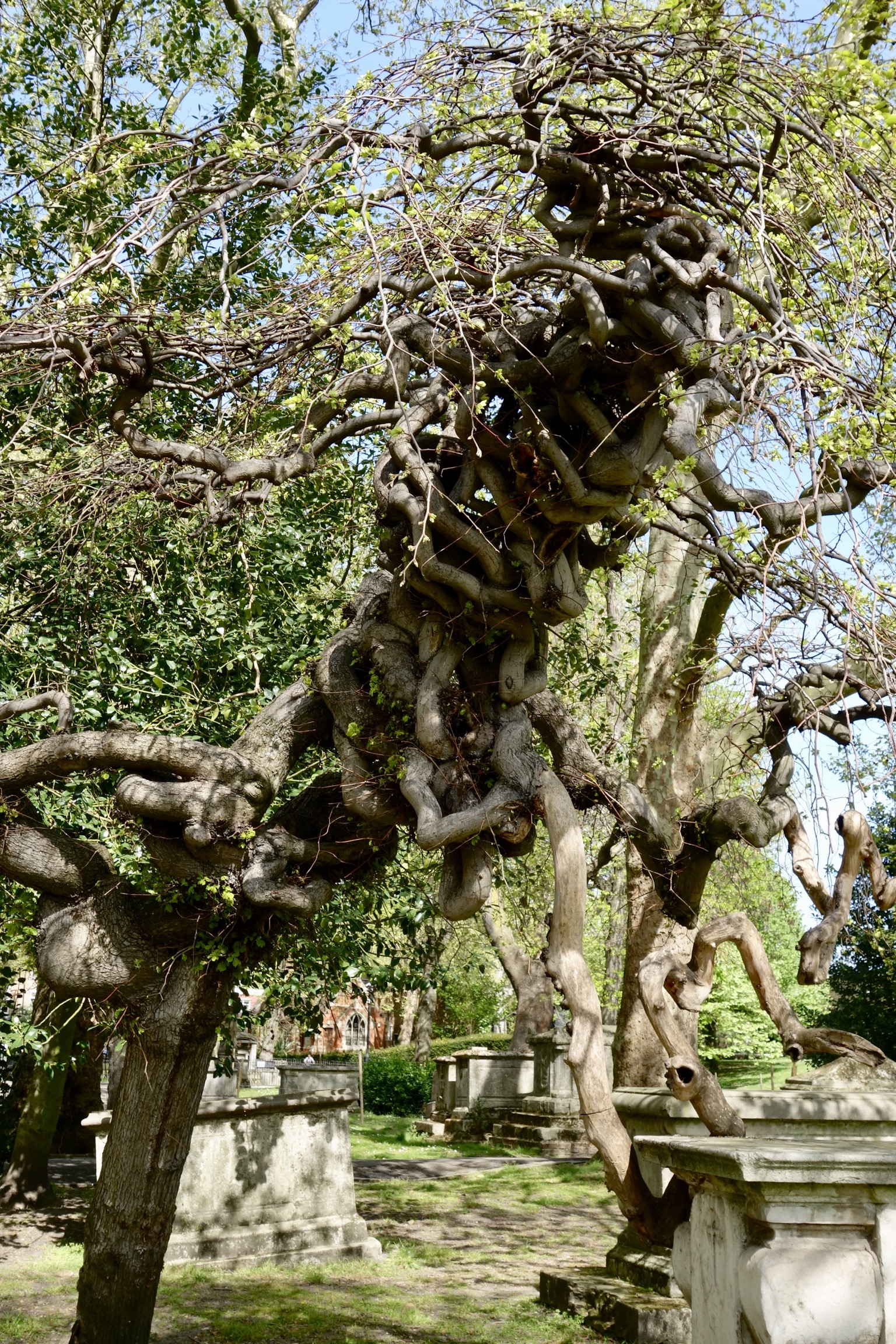
Hundreds (thousands?) of remains were dug up and reburied in a mass grave somewhere. The official in charge of the project appointed his underling, the future poet and novelist Thomas Hardy, to carry out the dismal task. Hardy repurposed some of the headstones, arranging several score in concentric circles. He or a contemporary planted an ash tree in the center, which over the last ~150 years has grown over and through the stones.
Update 28 December 2022: Saddened to learn that the Hardy Tree, having been weakened by a storm, has fallen. See the story at The Guardian.
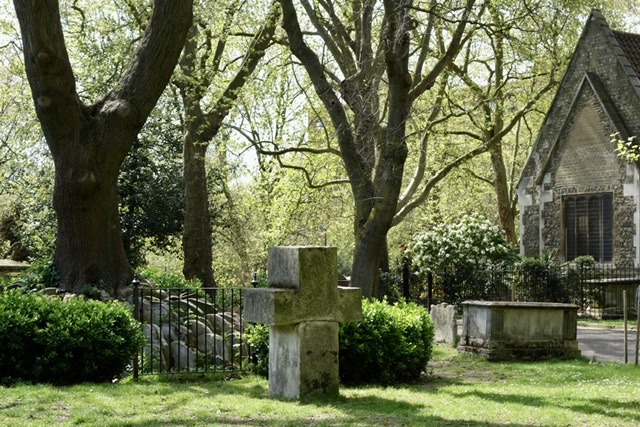
Other arrangements of stones
From The Levelled Churchyard, by Thomas Hardy
"O passenger, pray list and catch
Our sighs and piteous groans,
Half stifled in this jumbled patch
Of wrenched memorial stones!

"We late-lamented, resting here,
Are mixed to human jam,
And each to each exclaims in fear,
'I know not which I am!'
...
"Where we are huddled none can trace,
And if our names remain,
They pave some path or p-ing place
Where we have never lain!"
Mary Wollstonecraft
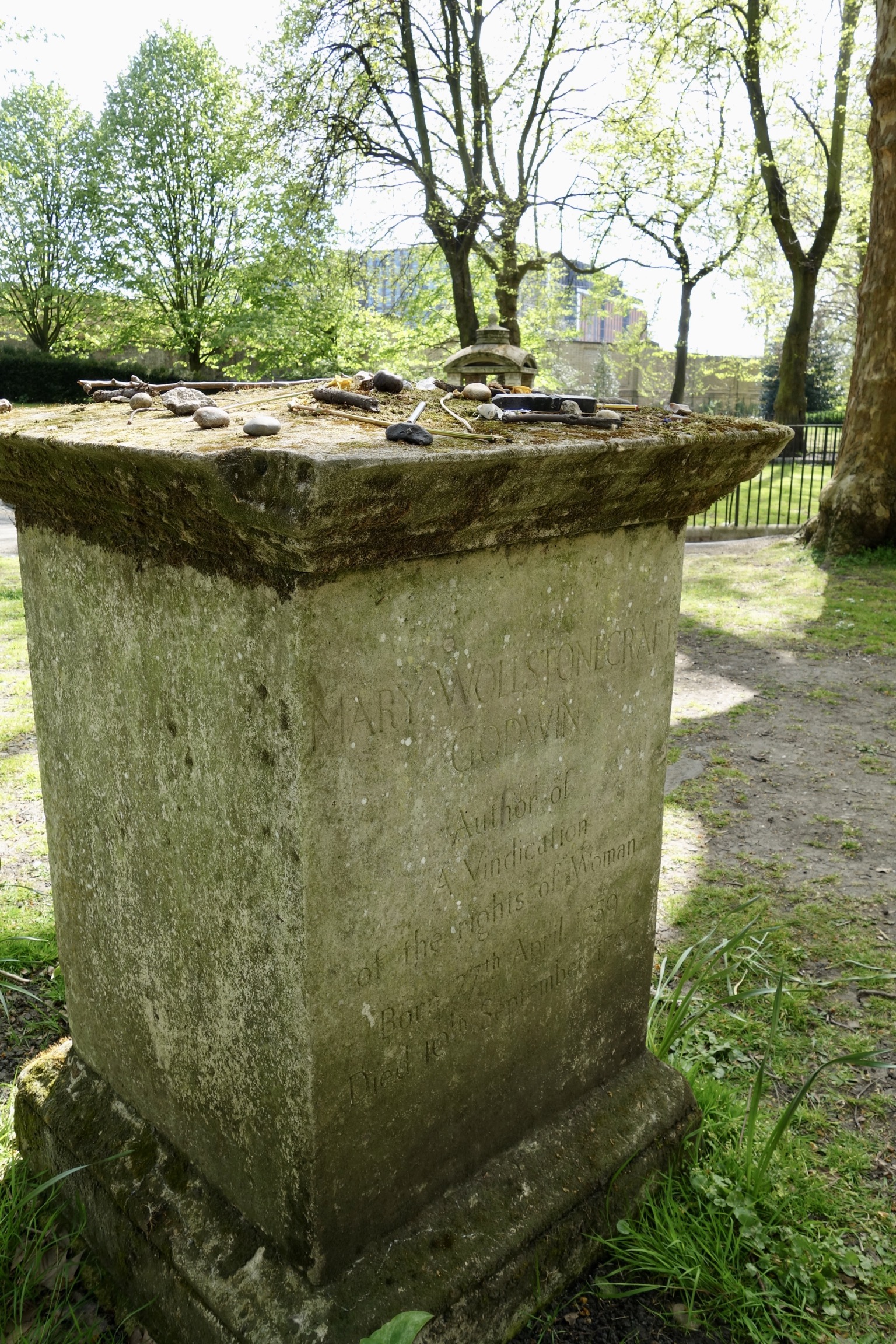
Not every grave was disturbed. Among the famous people still buried here is feminist author Mary Wollstonecraft, who in 1792 wrote A Vindication of the Rights of Women. She died shortly after giving birth to her daughter, Mary Godwin Shelly, author of Frankenstein. Admirers leave pencils and pens on top of her stone.
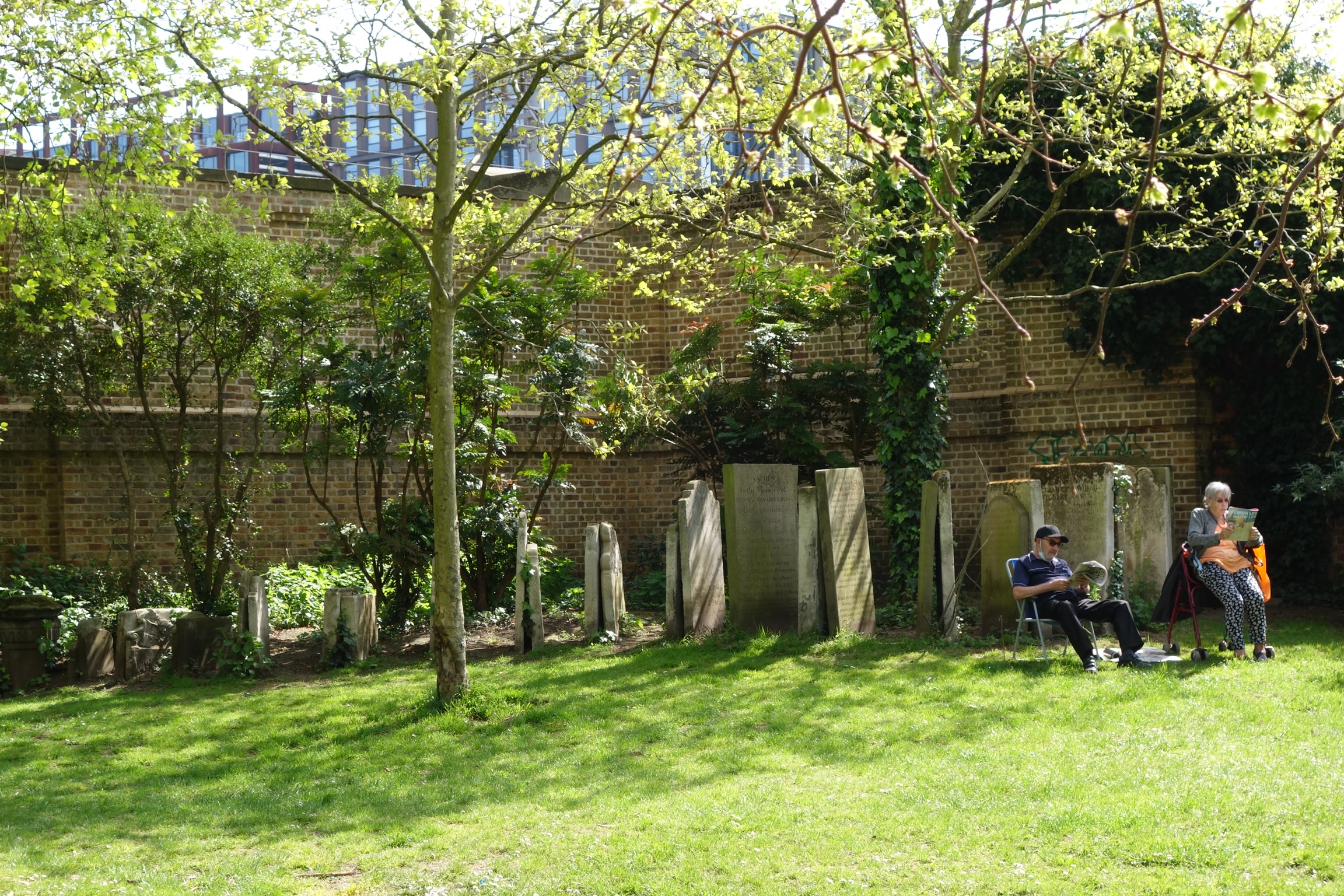
Despite its setting by London’s busiest rail stations and Euston Road, the city’s most congested street, St Pancras churchyard is a quiet, green place.
St Pancras New Church
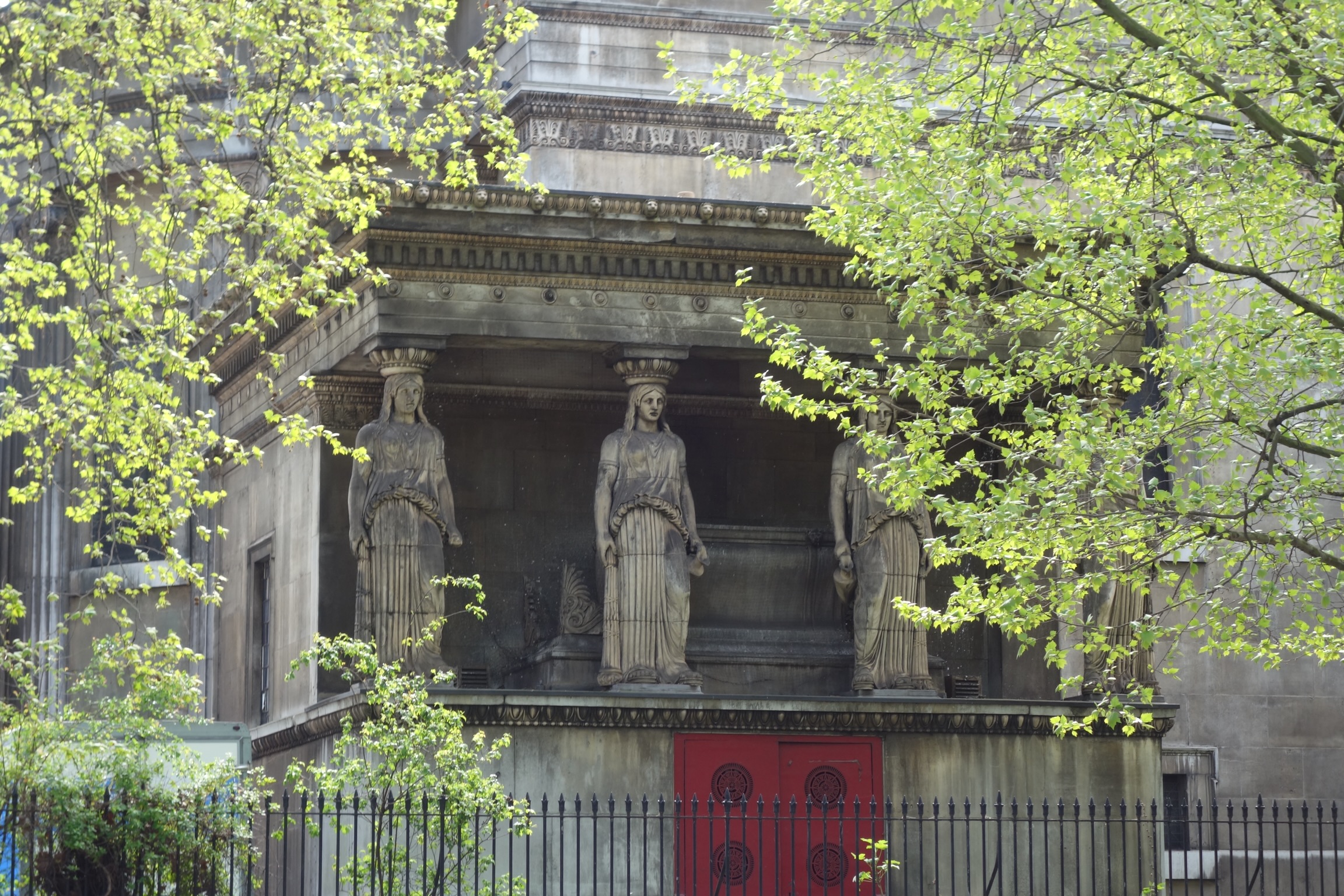
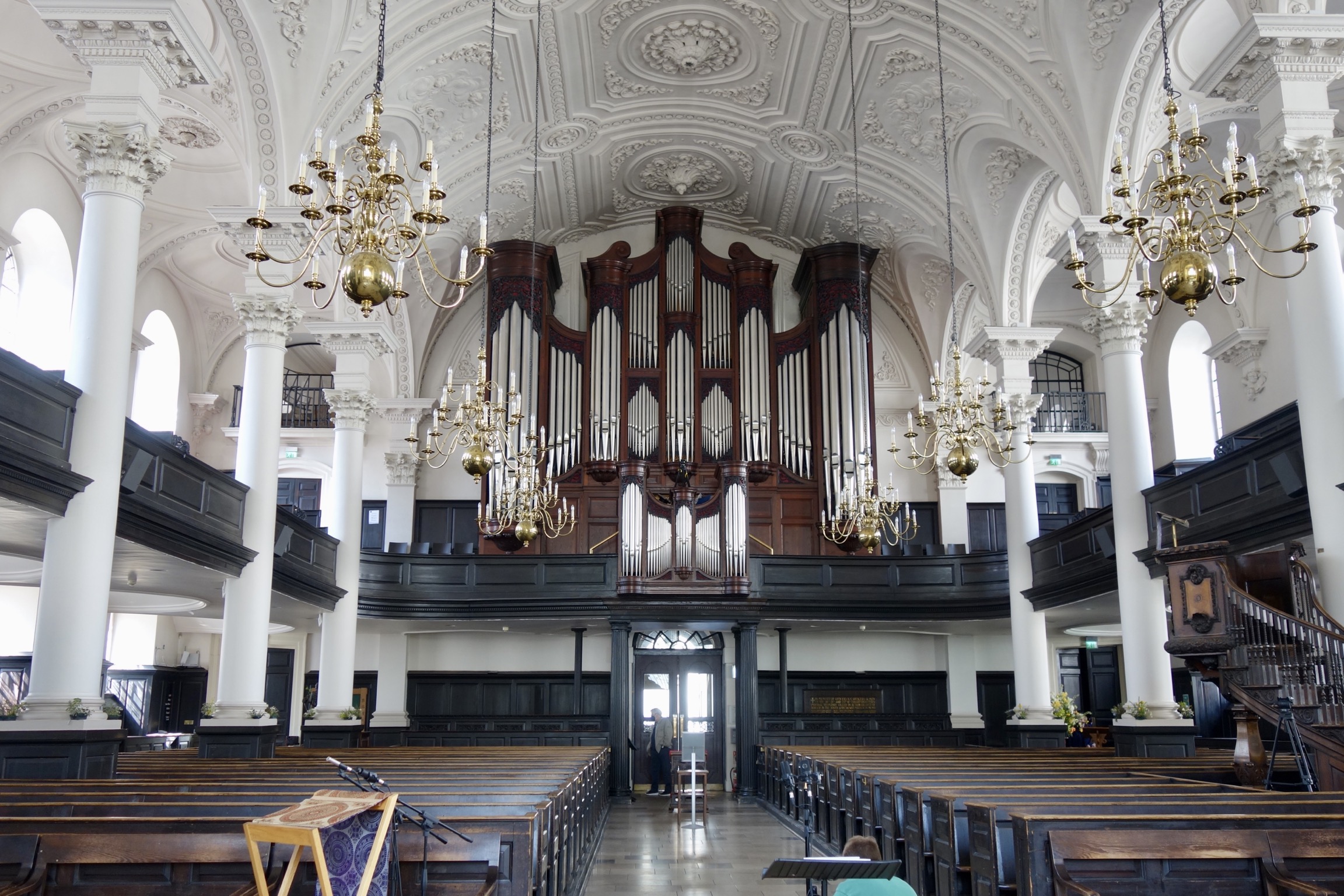
We’ve been driven many times past the caryatids on the front porch of this fine early 19th-century church on Euston Road, one of the busiest streets in London. According to the kind attendant inside, when new mansions and grand apartments were built in nearby Bloomsbury, the old church would not suffice, so this elegant, very Protestant edifice was called for.
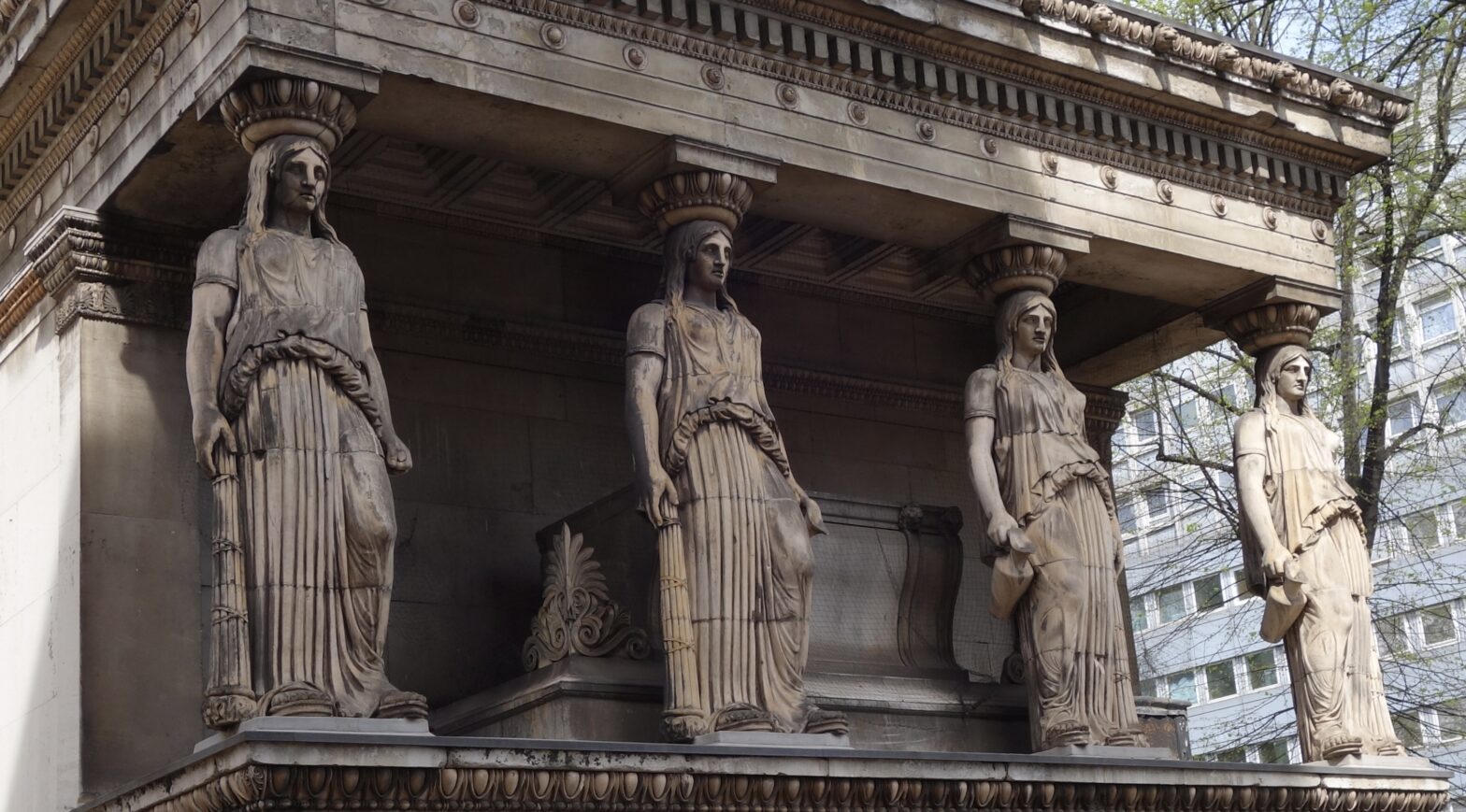
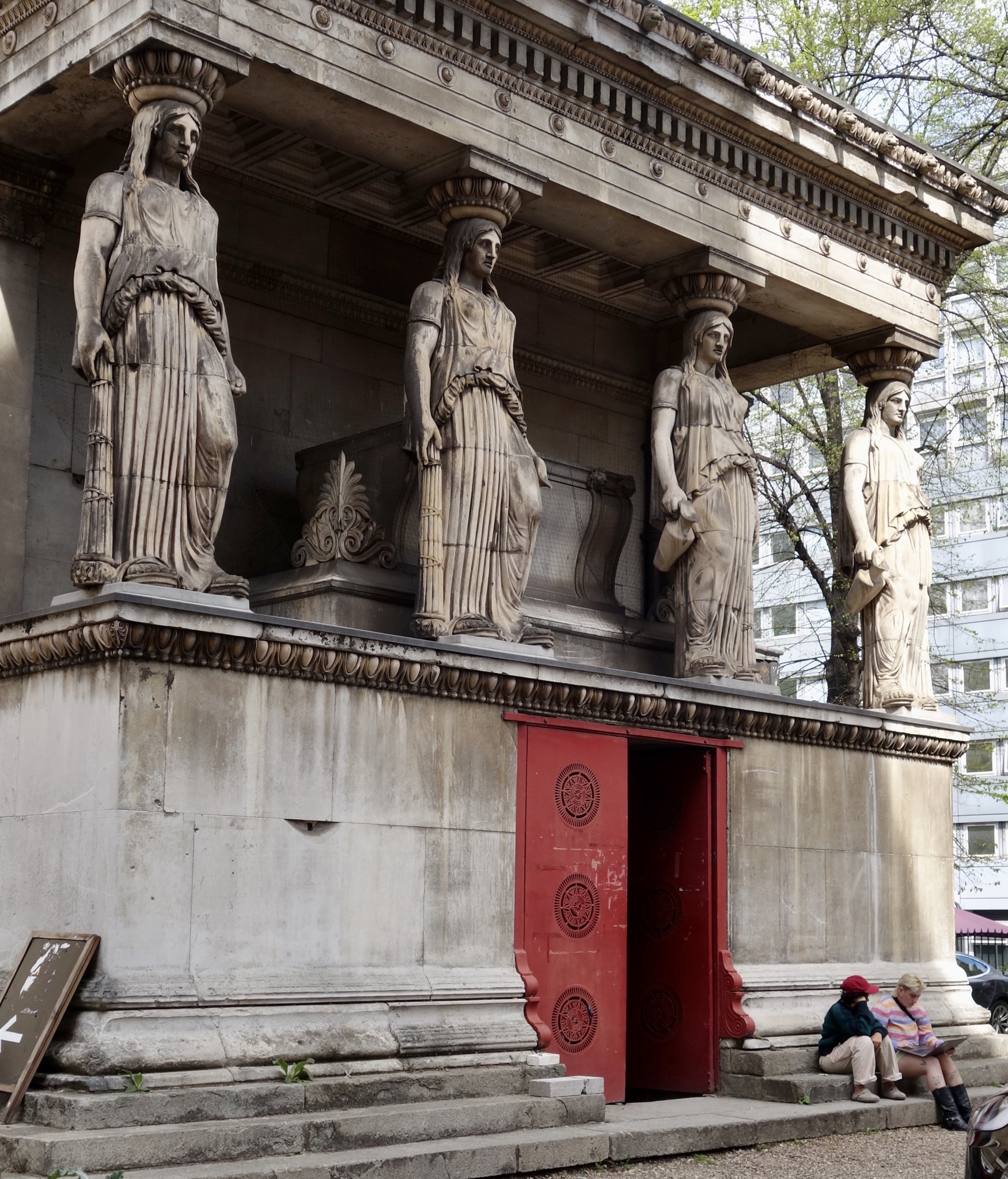
Caryatids also feature at the rear of the church:
We also visited the British Museum for tea and strolled down to Cornelissen’s, provider of paints and pigments since the days of Turner. I bought a small jar of neutral raw umber.