Fearing another destructive Viking raid, the monks at Lindisfarne moved St Cuthbert’s remains, along with The Lindisfarne Gospels, possibly to Carham or Norham, but certainly to Chester-le-Street and then to Durham. In 2015, the church raised funds to purchase a facsimile of the Lindisfarne Gospels, which it displays in church.
St Mary and St Cuthbert,
Chester-le-Street
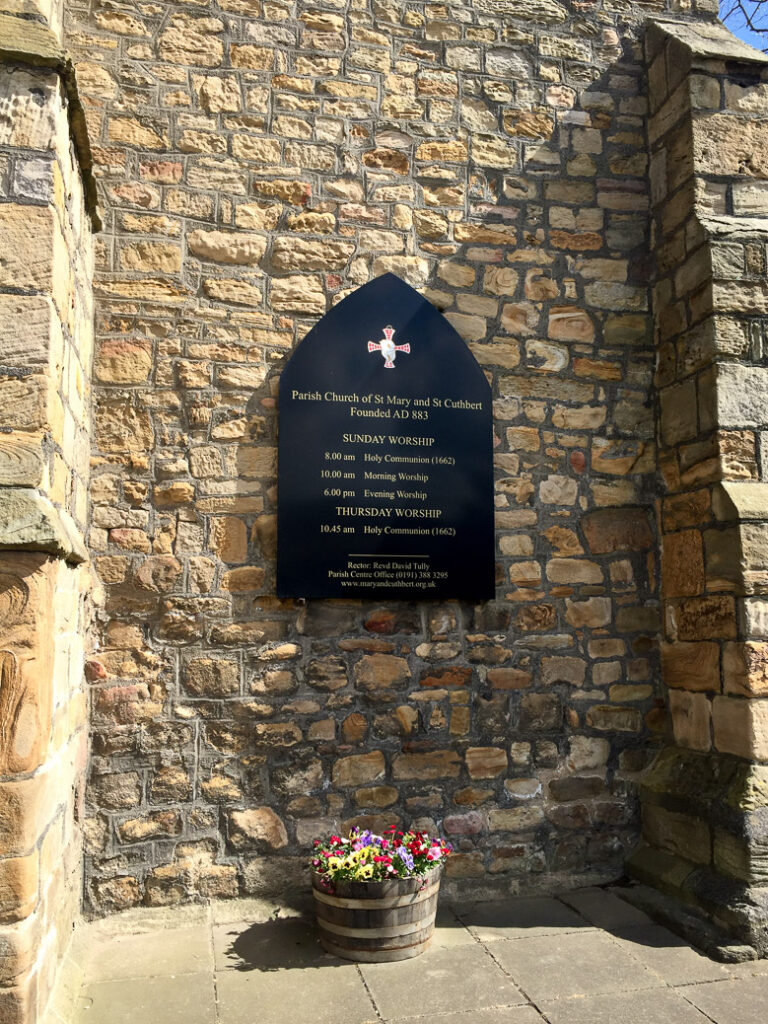
The Lindisfarne Community brought the coffin with the incorrupt body of St. Cuthbert, the head of the Christian king Oswald and the Lindisfarne Gospels here in 883. . . .Once established, they built a wooden shrine for their saint, a scriptorium and domestic accommodation and remained here for 112 years. During this time the Bishops of Lindisfarne at Chester le Street presided over a huge diocese stretching from Lothian in the North to Teesside in Northern England and from the west to the east coasts .
from the church’s website, on the history page of the Saxon Cathedral
Anker House
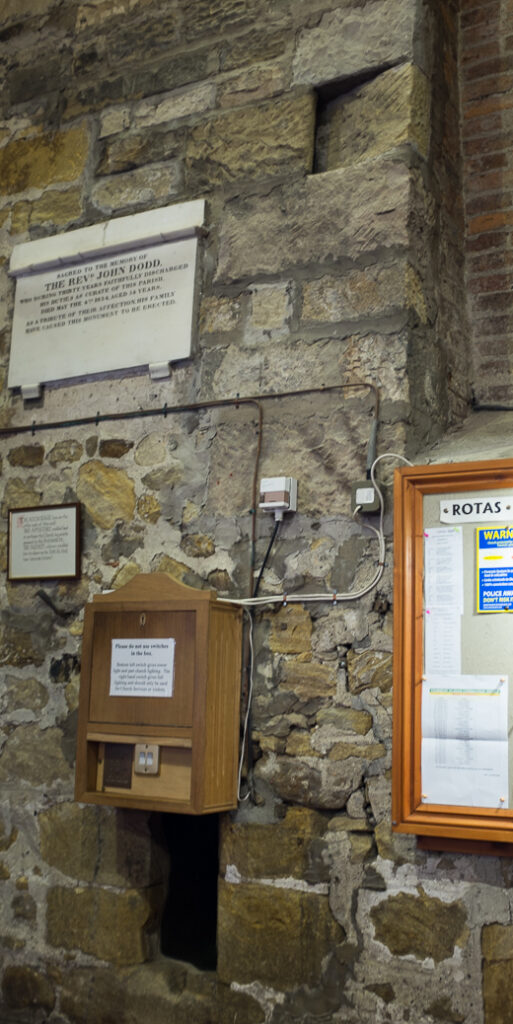
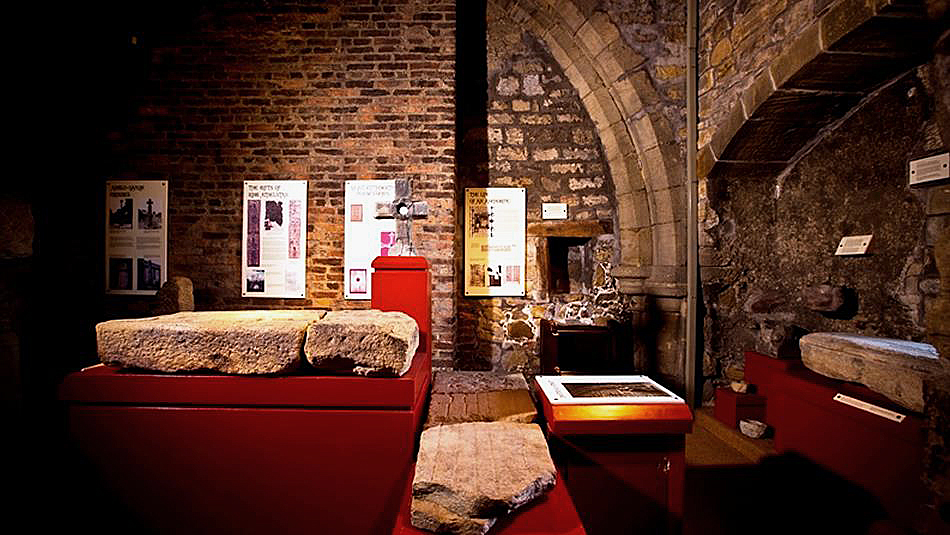
The Anker’s House adjoining the Parish Church was the residence of an Anker/Anchorite – a religious recluse from the 14th to the 16th century and was probably established sometime around 1350 – 1380. Up until 1547 it was the residence of six anchorites who in turn were walled up in the house for life to spend their time in prayer and comtemplation. After the Reformation, the anchorites disappeared and their dwelling became an almshouse.
from the church’s history page on its anchorites
See also In pursuit of saints with funny English names; Cuthbert in Carham; Cuthbert in Norham; Durham.