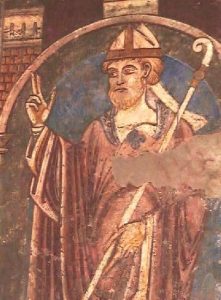
Growing up Episcopalian in the US, I had very occasionally and quite idly wondered why anyone would name a church after guys with weird names like Aidan or Cuthbert. The few images I saw of them did not suggest anything even remotely interesting. Somber figures in Bishop’s robes and miters did not inspire curiosity. They were not portrayed as being pierced with arrows, grilled on giant barbecues, or torn apart by wild beasts, much less as preserving their virginity despite hideous torture. No pictures of them healing lepers and cripples or raising the dead. Just solemn old men with croziers.
As a medievalist, I pretty much skipped over the early Middle Ages and did my best to avoid all things Anglo-Saxon, apart from taking the required survey courses. Instead, I studied the late medieval period and read the more agreeable literature of Middle English and Old French, with the sporadic foray into Latin works.
But because of a research project I’ve begun, my attention has turned to “late antiquity” and the very early medieval period, basically the 300s through the 700s. I’m trying to understand the Gallo-Romans and the Franks–the peoples who made up France before it was France. So, more folks with funny names– Radegund, Clothar, and Fortunatus–as well as the familiar Gregory and Martin (both of Tours). Visiting the places they lived or touched is one of the themes of this trip.
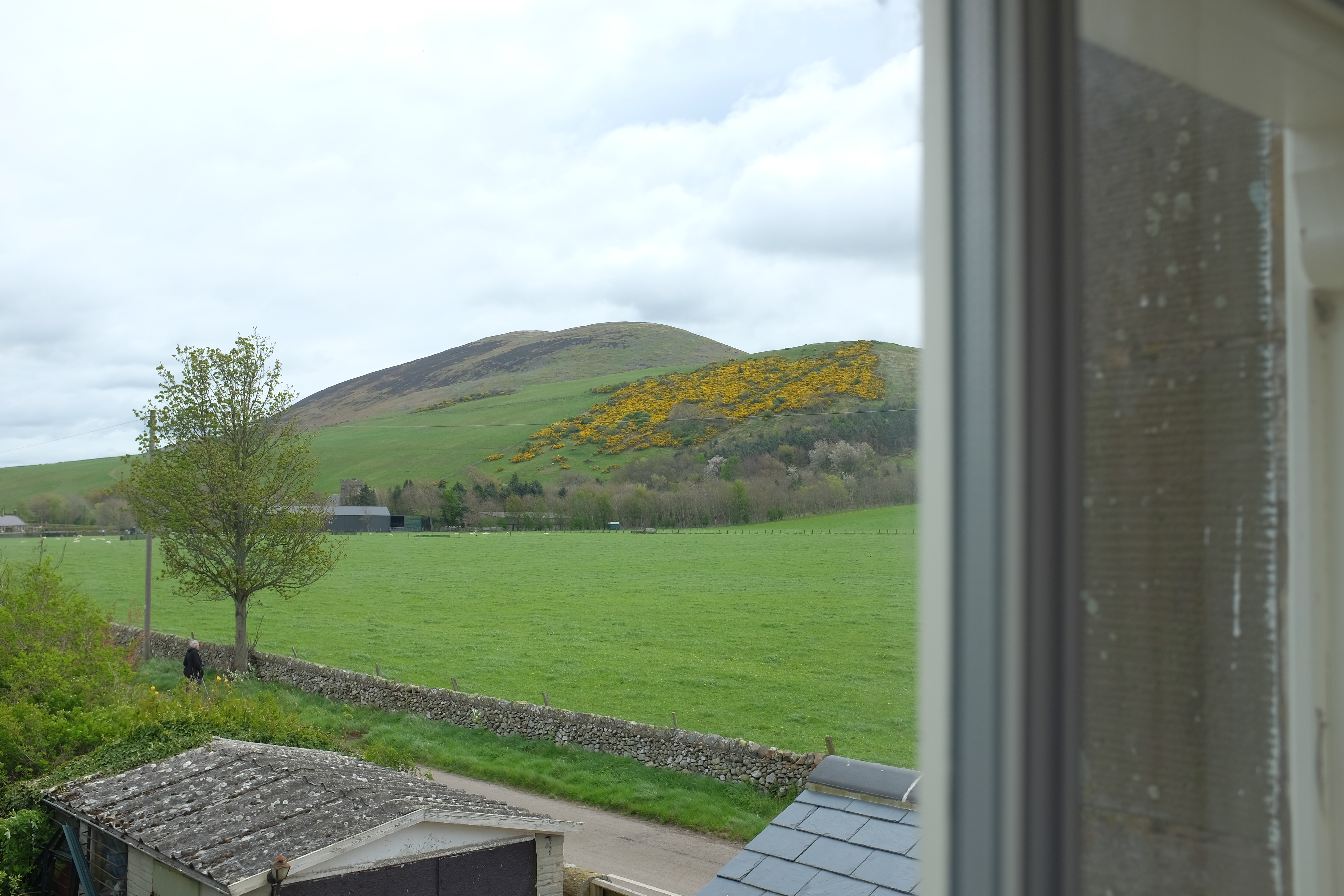
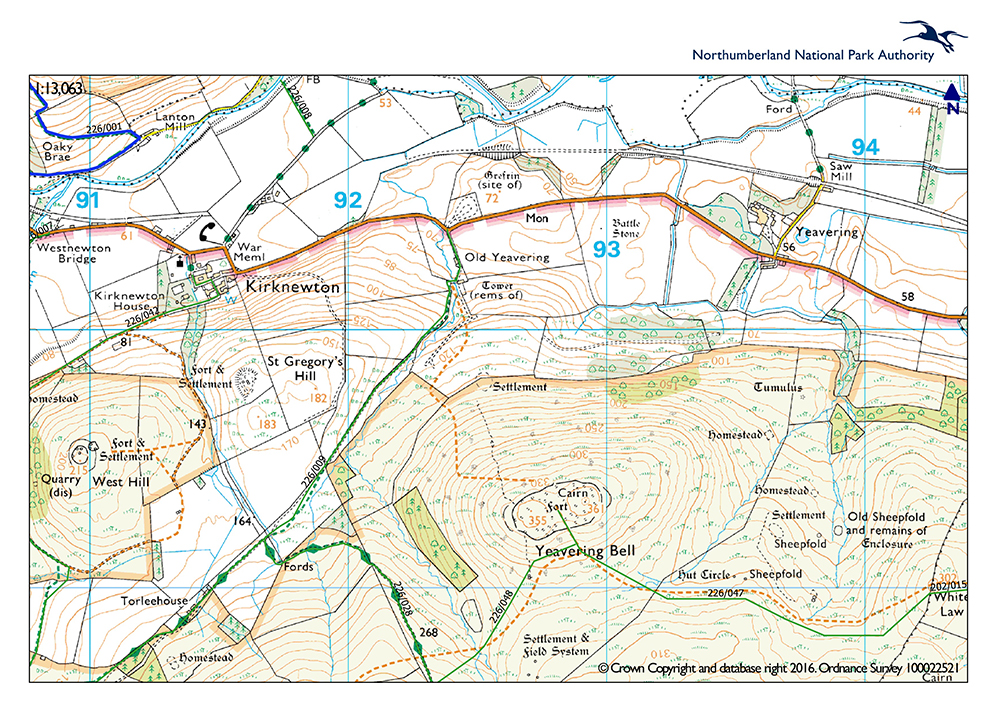
And then there are those other Germanic invaders, mentioned earlier. Inspired by all the Anglo-Saxonists in the history methods class I took last year, I determined to take better advantage of the Anglian remains and ruins near our niece’s home in Northumberland, where ~1300 years ago flourished a large and powerful kingdom. She and her husband live down the road from Yeavering (a royal enclave, mentioned by the great historian Bede as “Ad-Gefrin”) and across the road from Yeavering Bell, a hill featuring an Iron Age hill fort and an Anglo-Saxon fort.
To this day the names of Cuthbert and Aidan, especially Cuthbert, are everywhere in the former Northumbria, which stretched from west of Edinburgh to south of York. Girl guide troops, social clubs, street, pubs, hotels, and schools bear his name.
Who was Cuthbert? He was born around 634, in probably what is now Scotland; he may have walked the long path that now bears his name (http://stcuthbertsway.info; we walked part of it some years ago) to join the monastery at Lindisfarne (founded by Aidan, also in 634), the holy island.
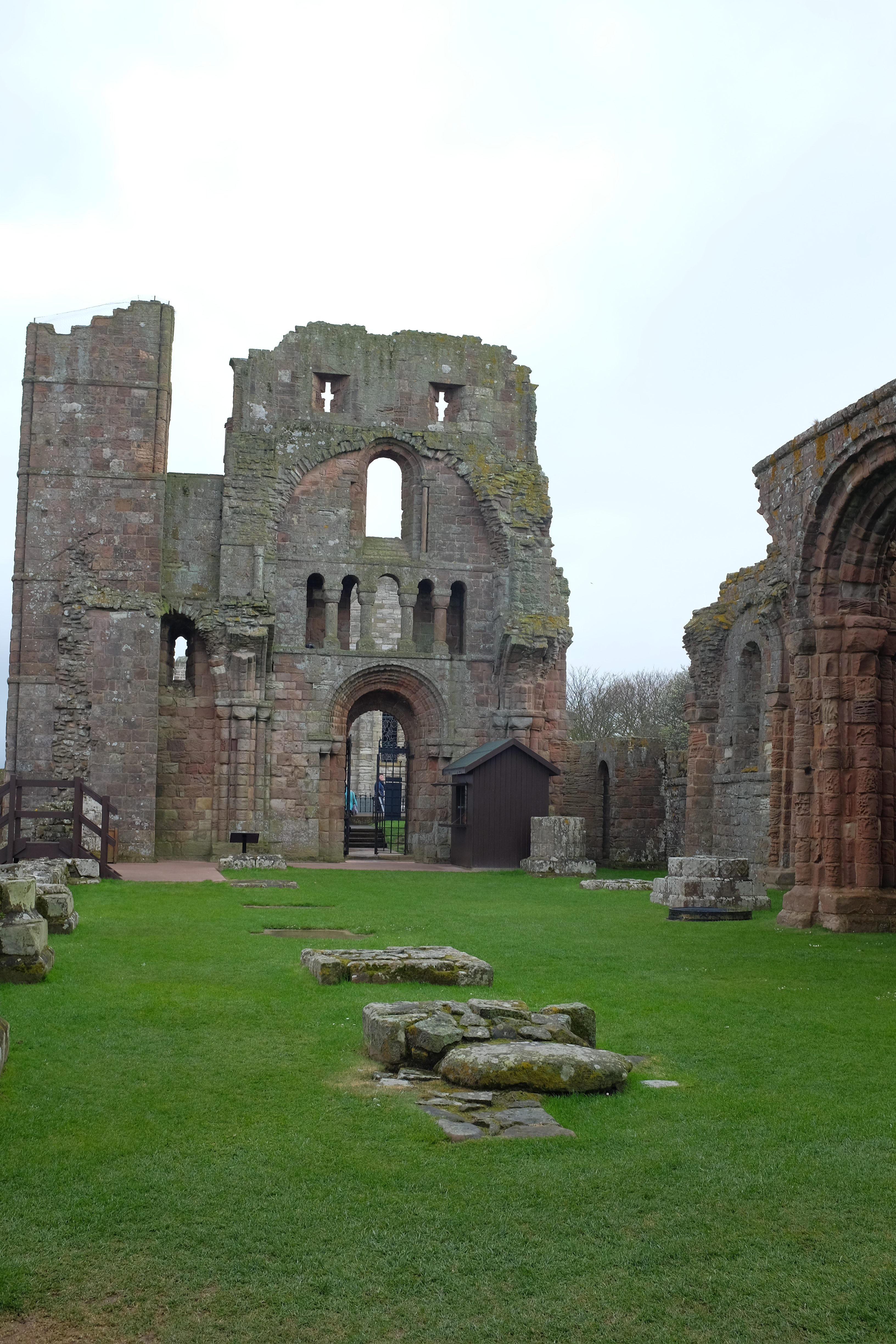
Though buried in rich ecclesiastical garb, most of his life he probably wore the rough woolen habit of a monk . He was a simple but charming man, and like Aidan, converted the heathen Angles and was friends with kings and peasants. His deep calling, however, was to the contemplative life, and he upped sticks to move to an island beyond Lindisfarne, where he lived as a hermit for many years until he was forced to become bishop of Lindisfarne. He also spoke with ravens, was befriended by otters, and established laws to protect eider ducks (“cuddy ducks”) and other sea birds.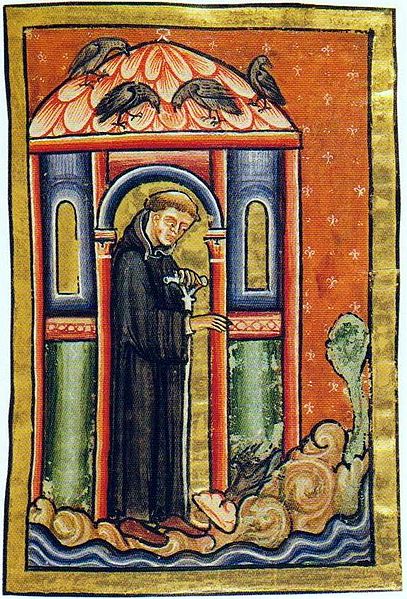
During life he performed the requisite miracles, and after his death, he performed still more, making his shrine an important site. After Viking raids made life on Holy Island impossible, the monks dug up his coffin and packed the precious relic, as well as the precious Lindisfarne Gospels, and began what would be a centuries-long journey to his final resting place in Durham, where they built a cathedral around him.
The still existing St Cuthbert’s church in Chester-le-Street (https://en.m.wikipedia.org/wiki/St_Mary_and_St_Cuthbert,_Chester-le-Street) held his remains for nearly two centuries. The church also guarded the Lindisfarne gospels, which one of its bishops translated from Latin into Old English.
See also Cuthbert in Carham; Cuthbert in Norham; Cuthbert on the move; Durham.