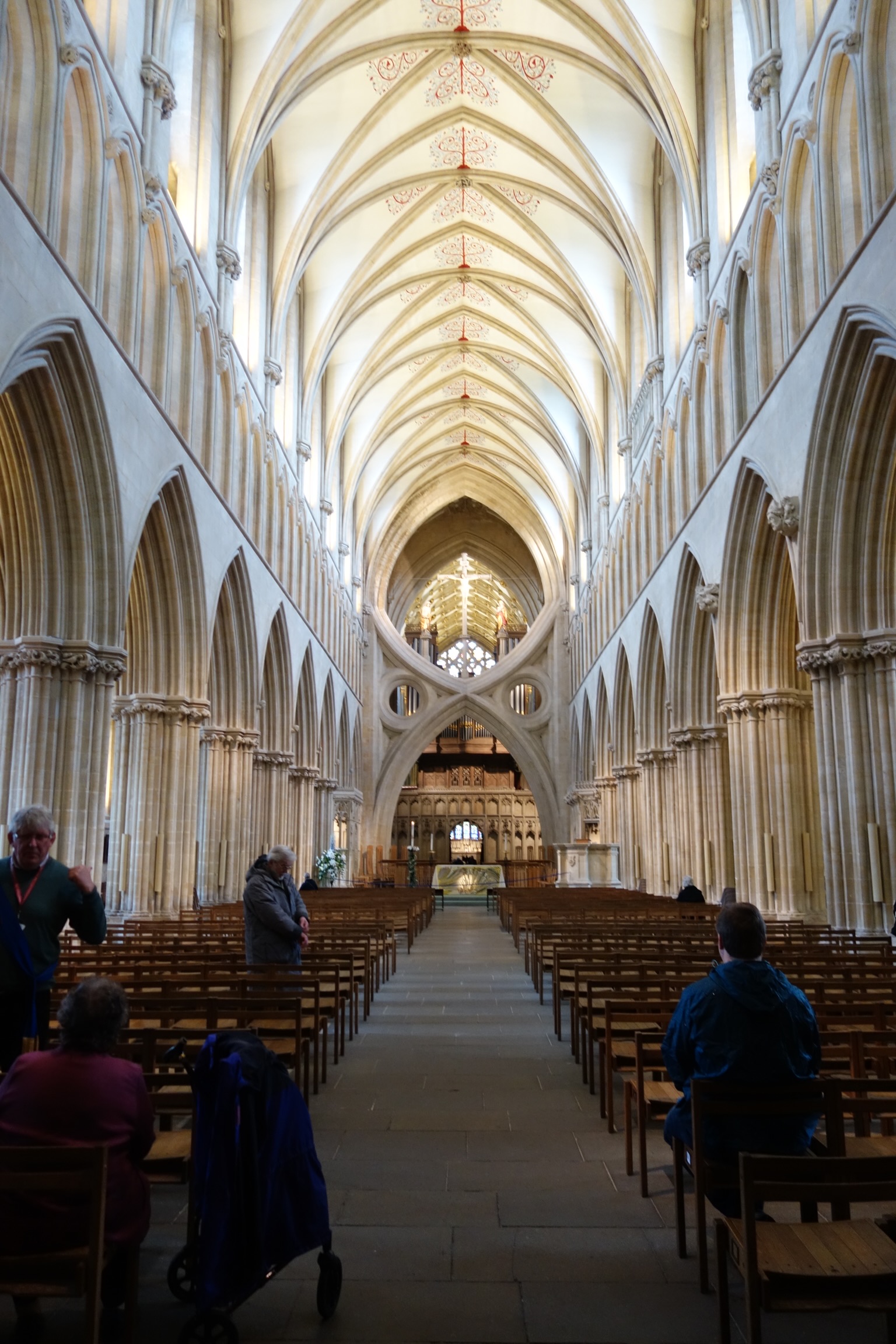
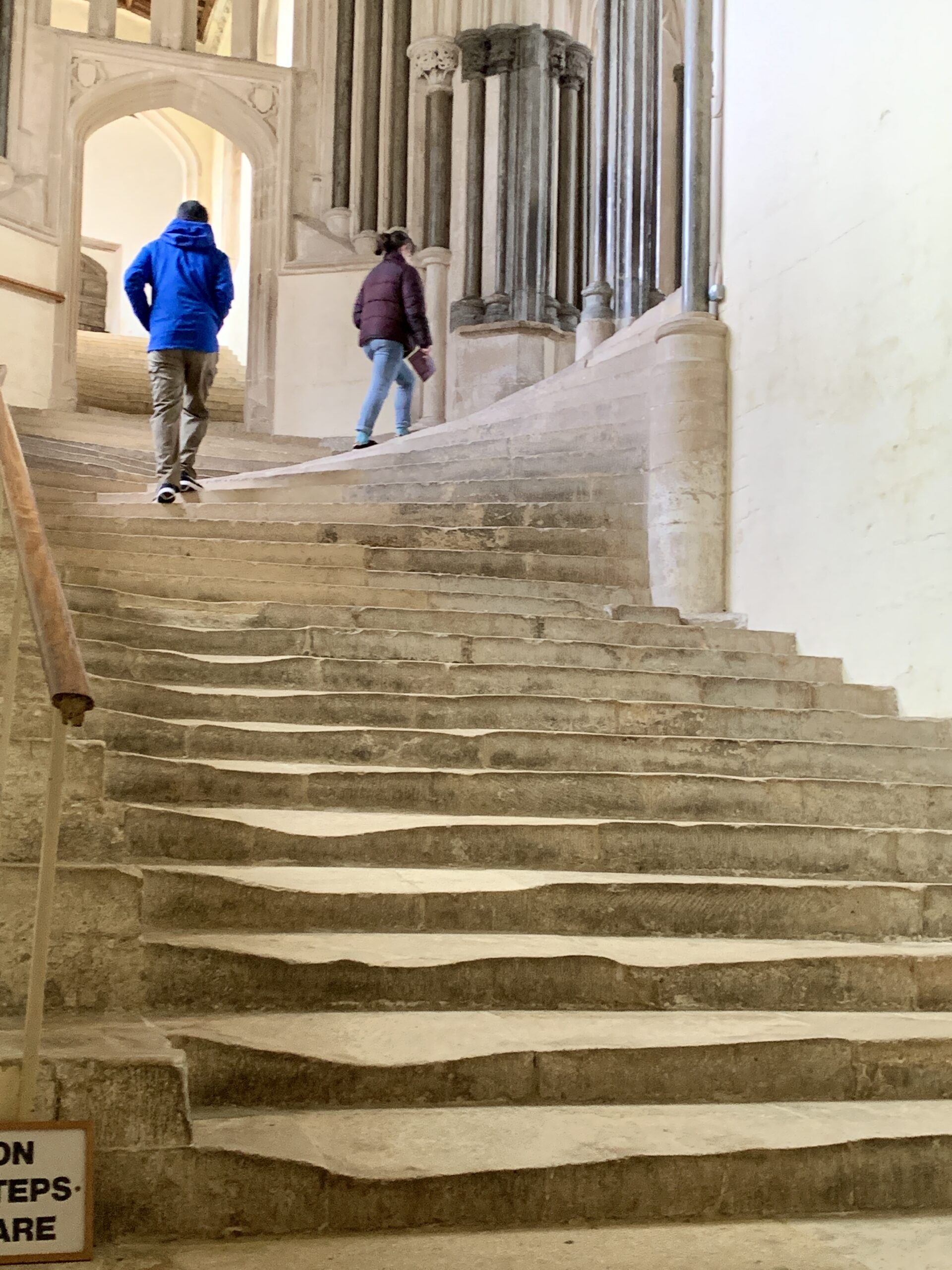
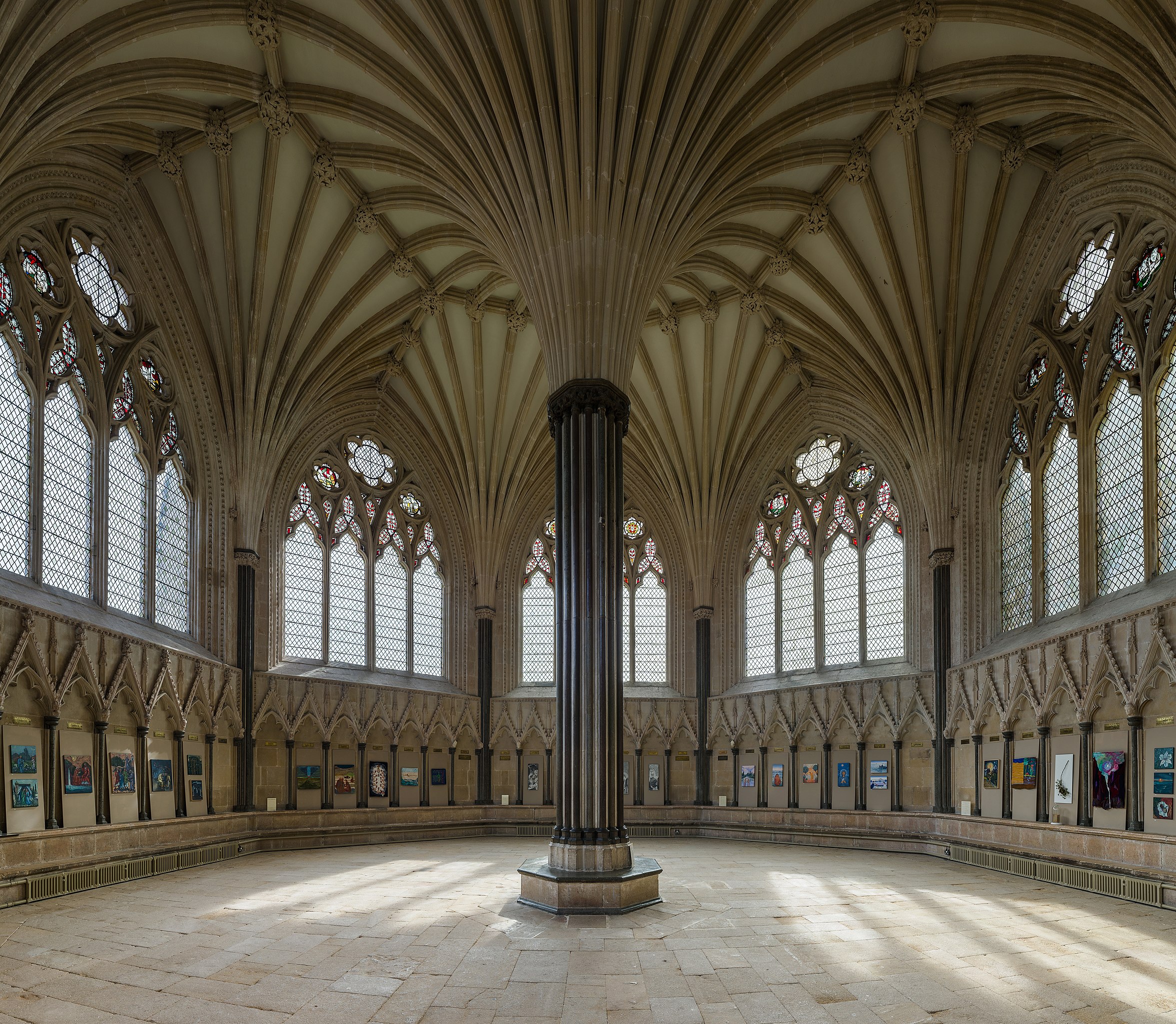
It was pouring rain when we reached Wells, which limited our exploration of the town itself. Technically, Wells (population 12,000) is not a town but a city because it has a cathedral. Fortunately, said cathedral is protected against the elements. Apart from being watertight, Wells Cathedral is a beautiful and complex structure, inside and out. Building began in the late twelfth century, and it was dedicated in 1239.
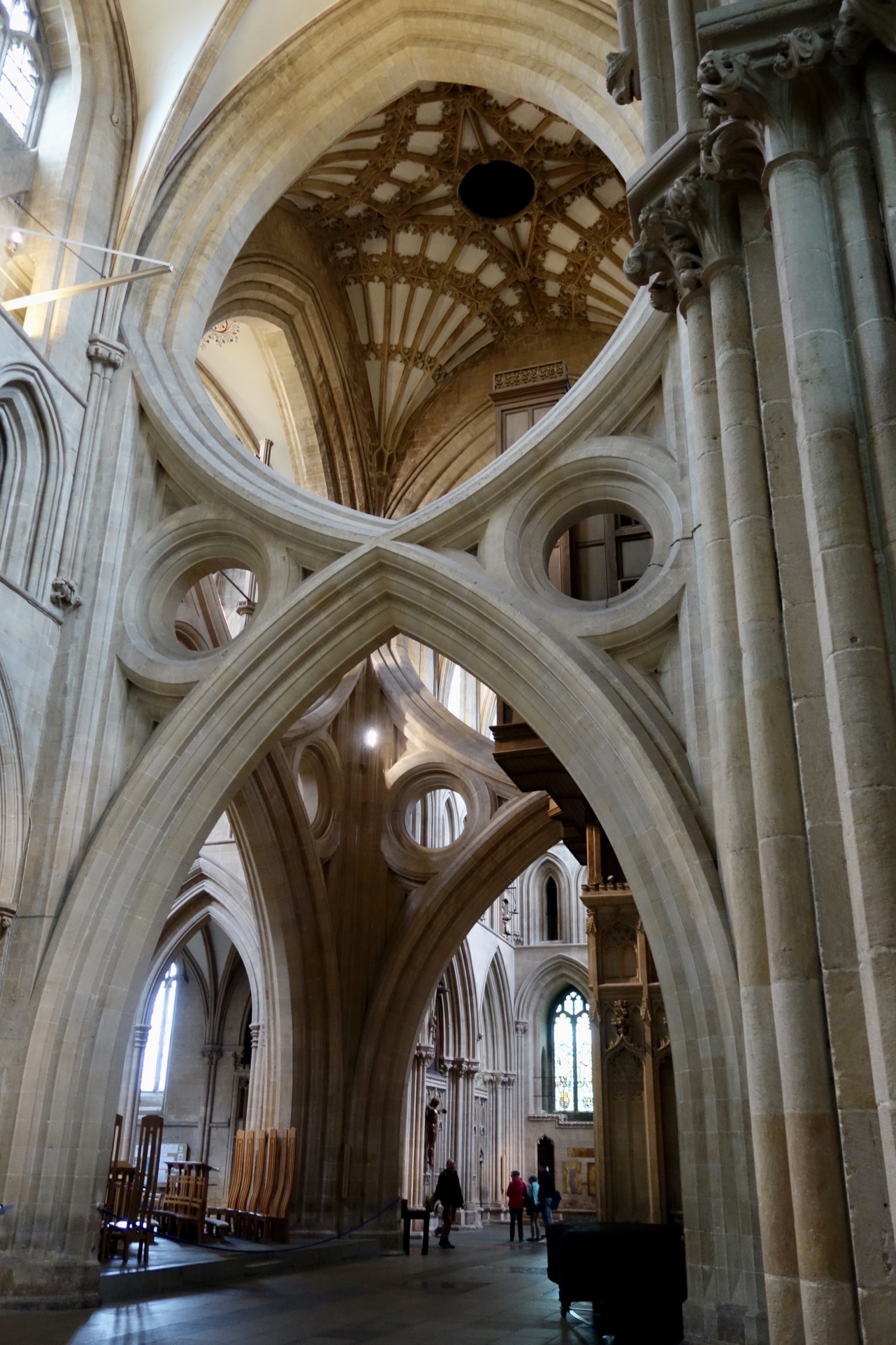
It is famed for its scissored arches, which look very modern, but were actually a 14th-century solution to a structural problem.
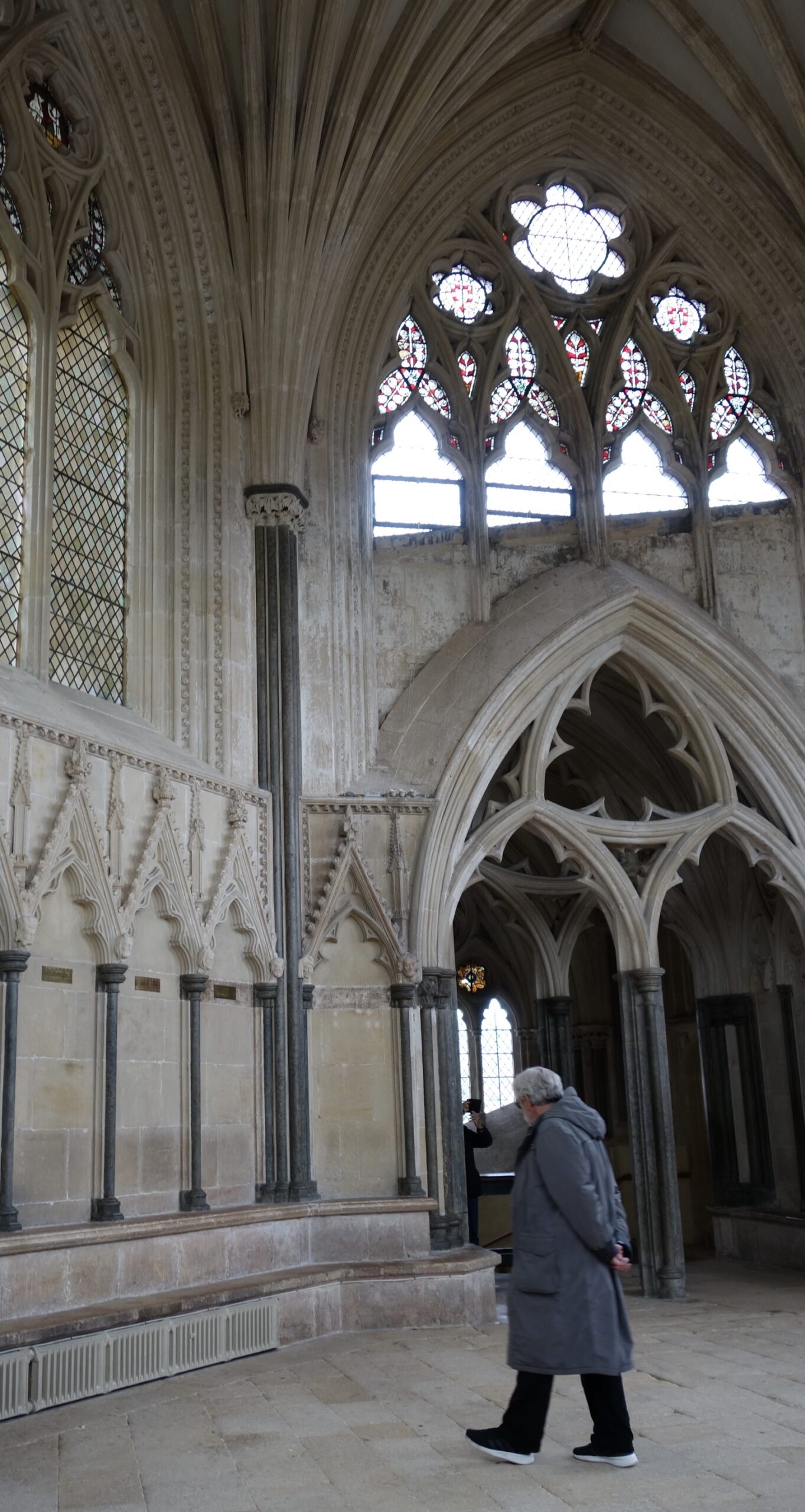
Chapter House
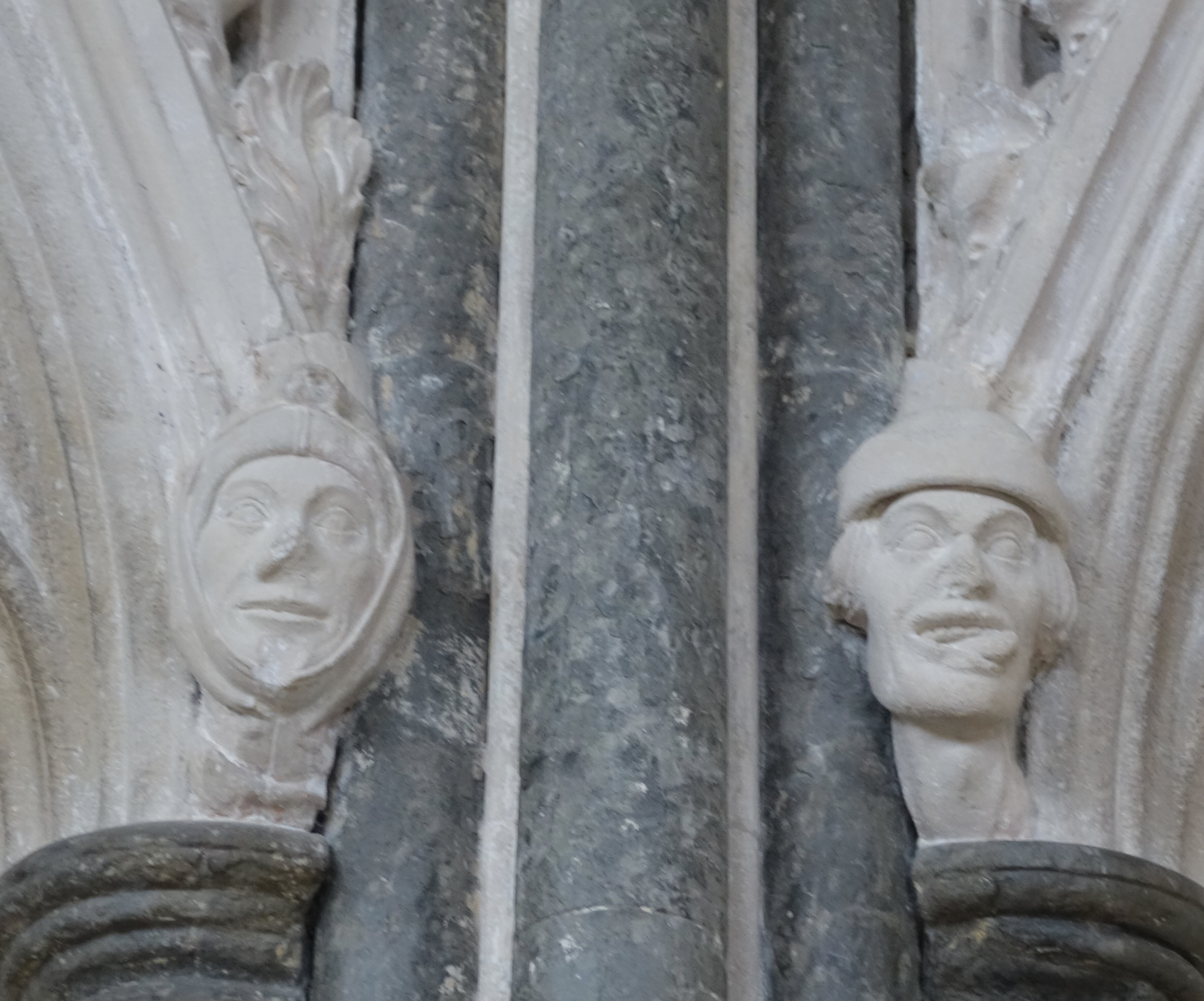
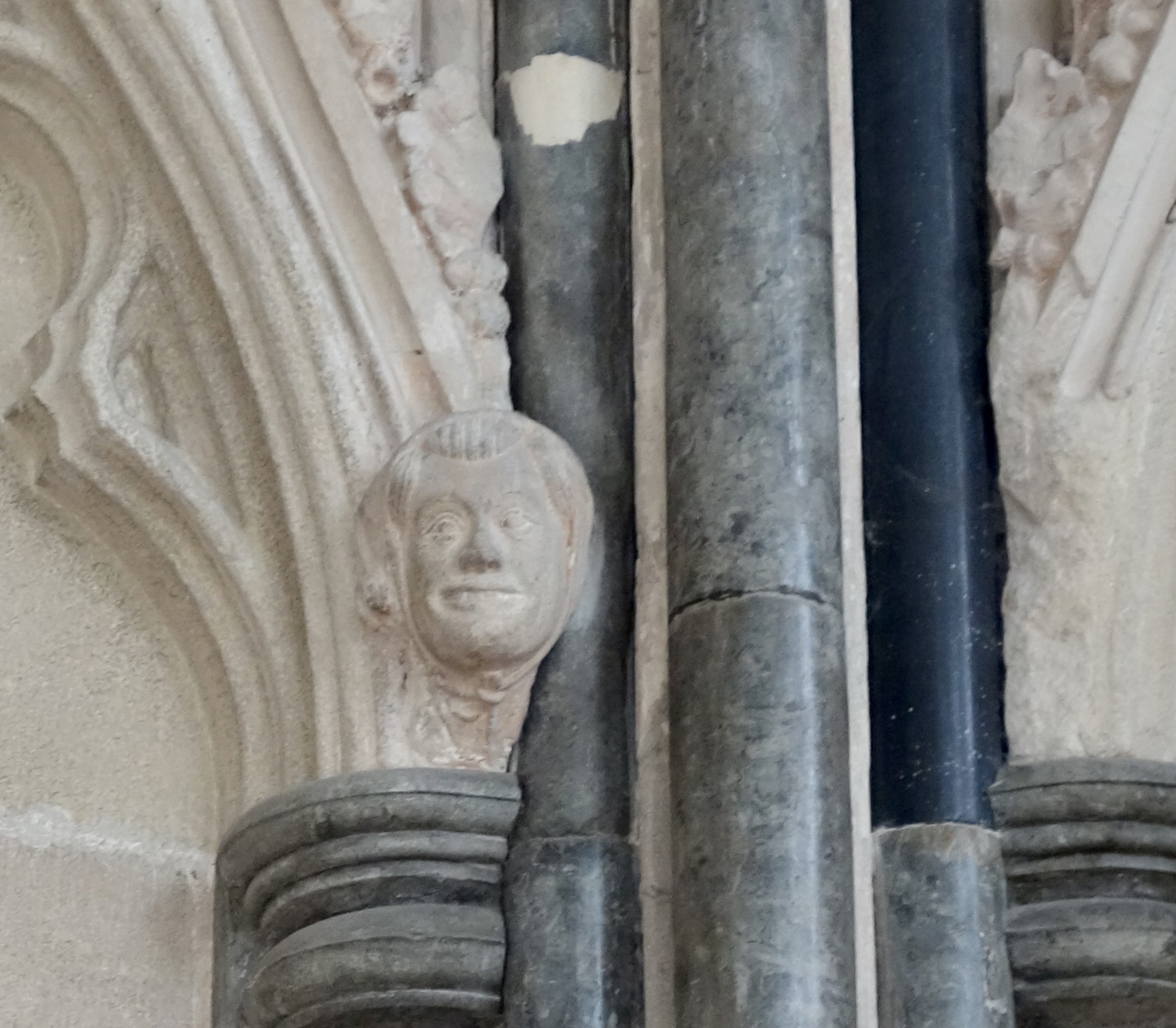
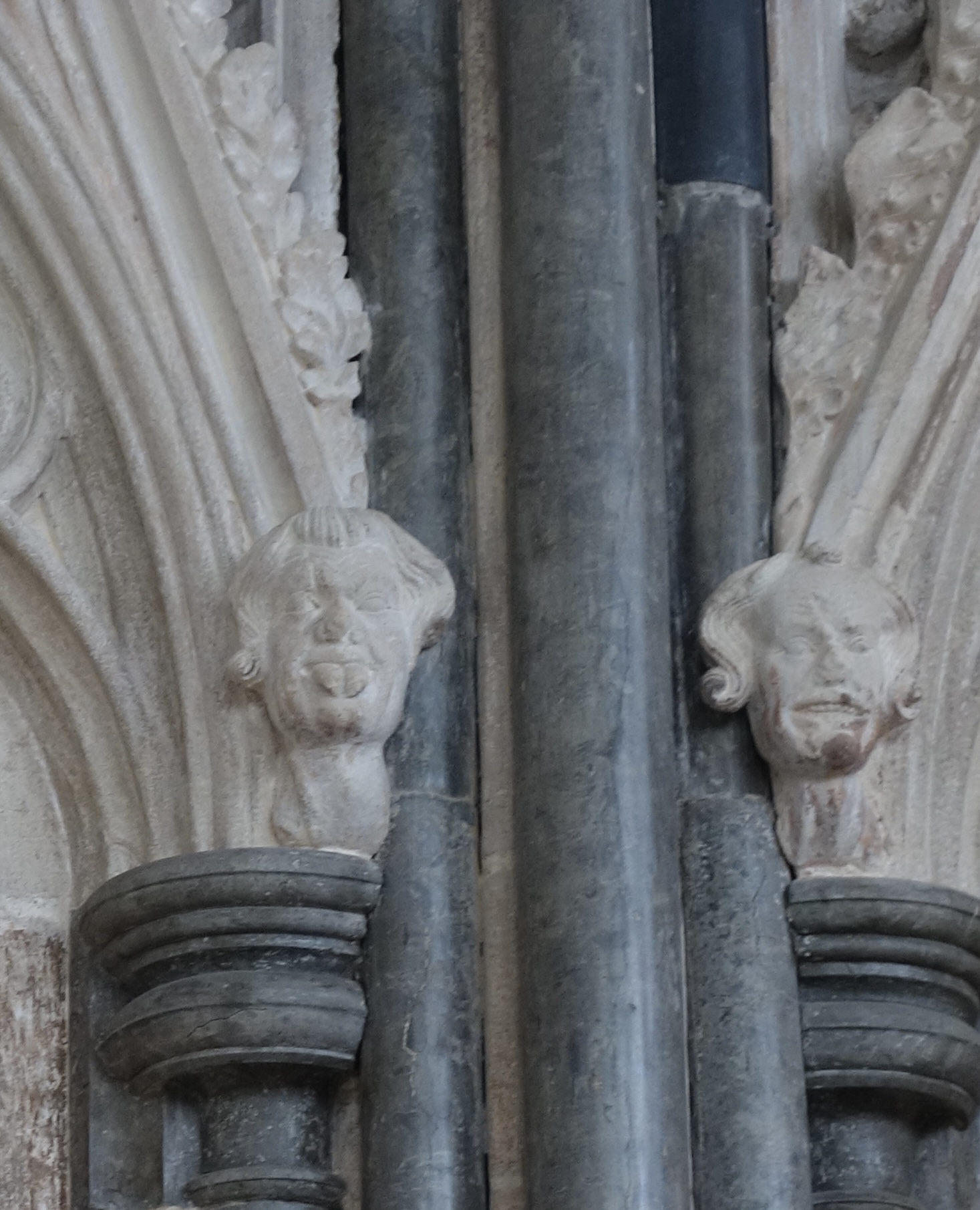
Carvings
The cathedral is noted for its sculptures and carvings, within and without.
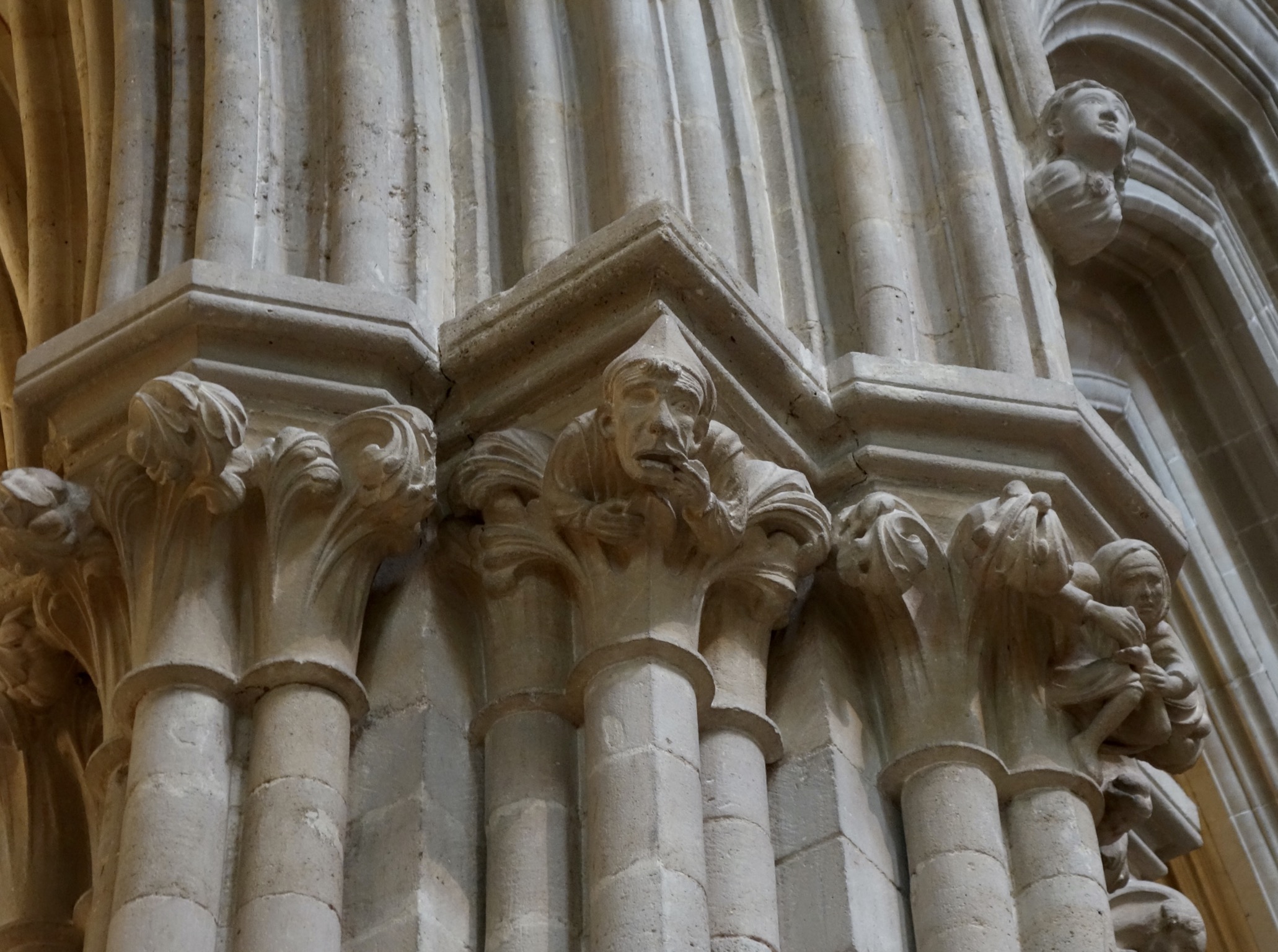
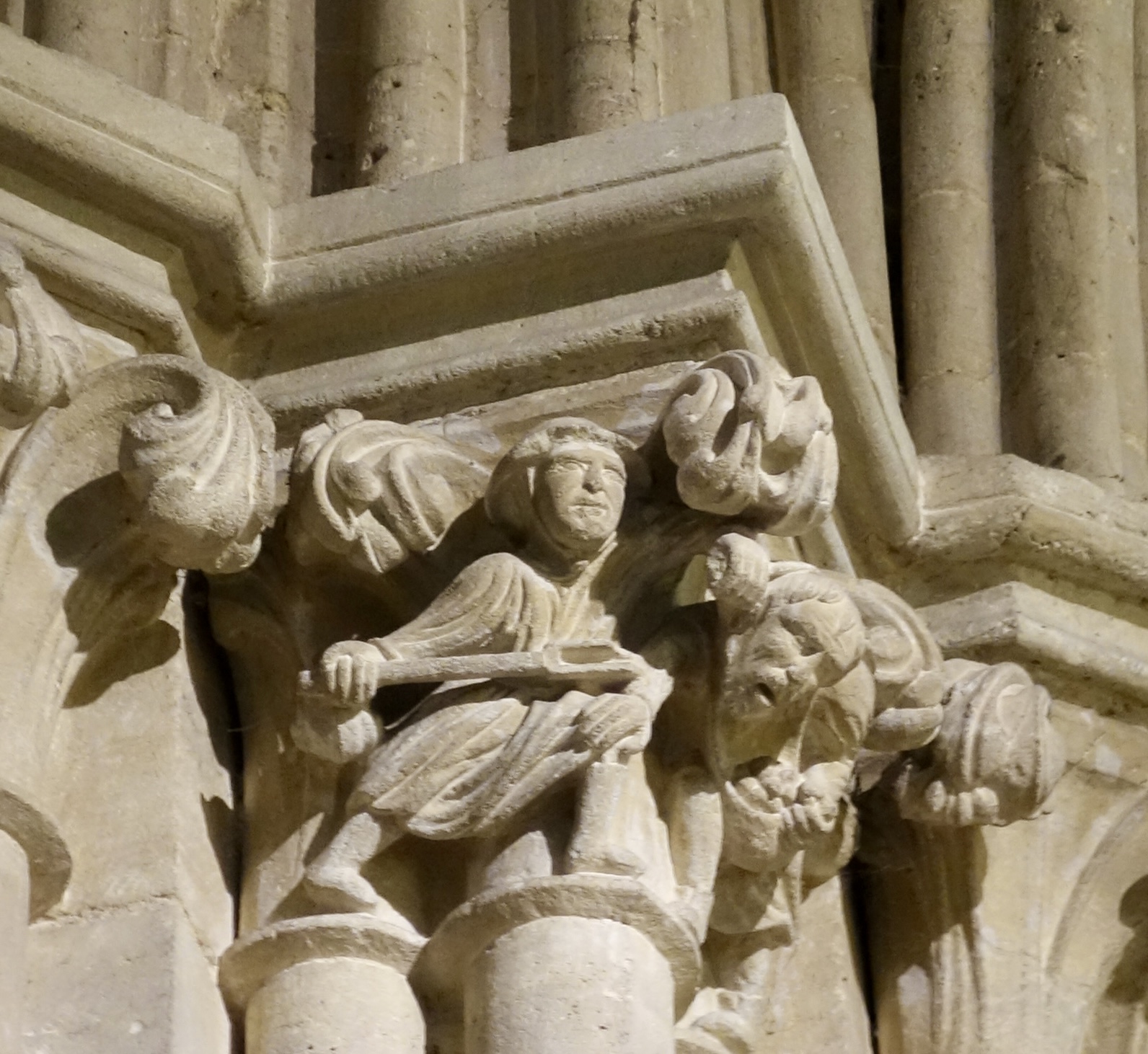
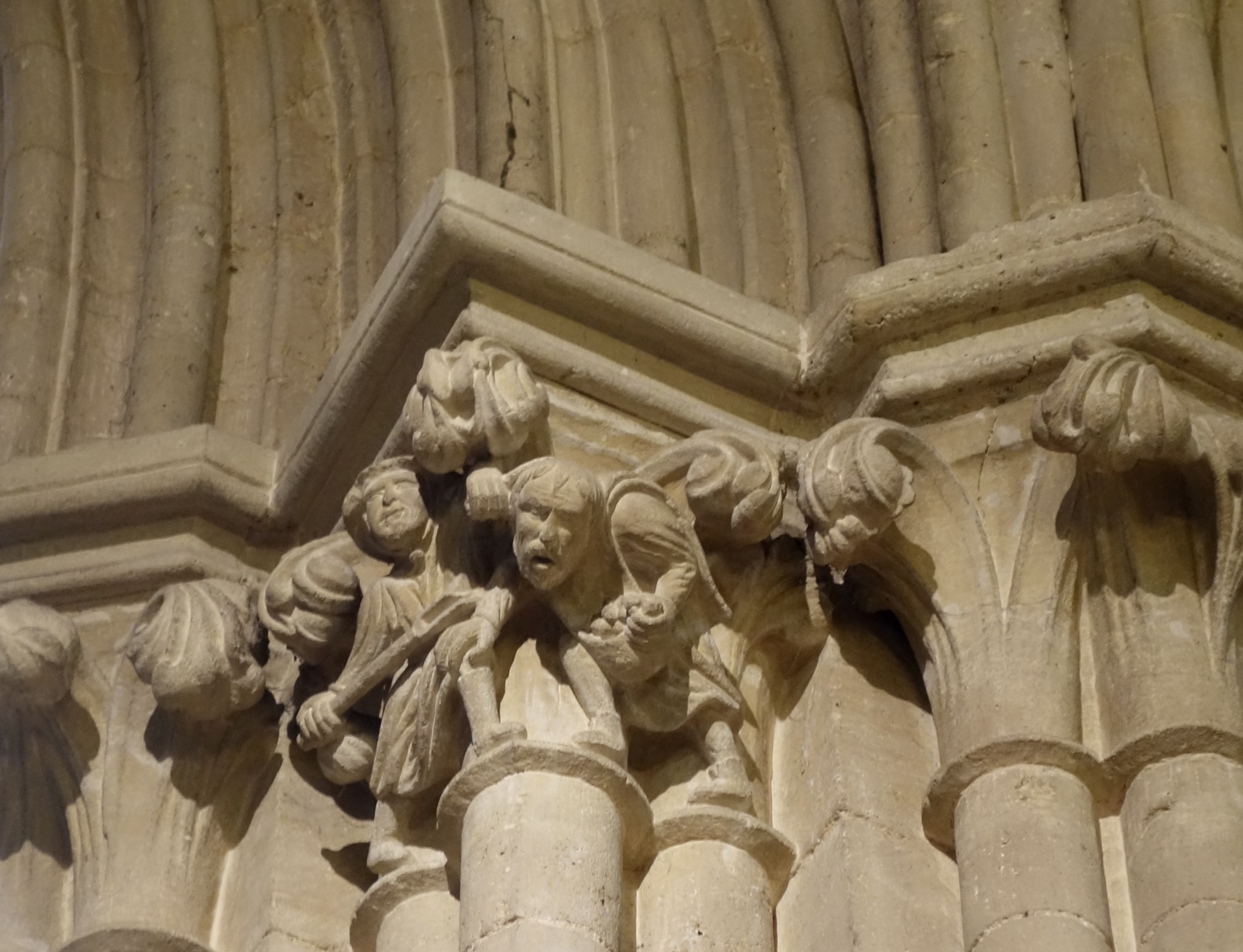
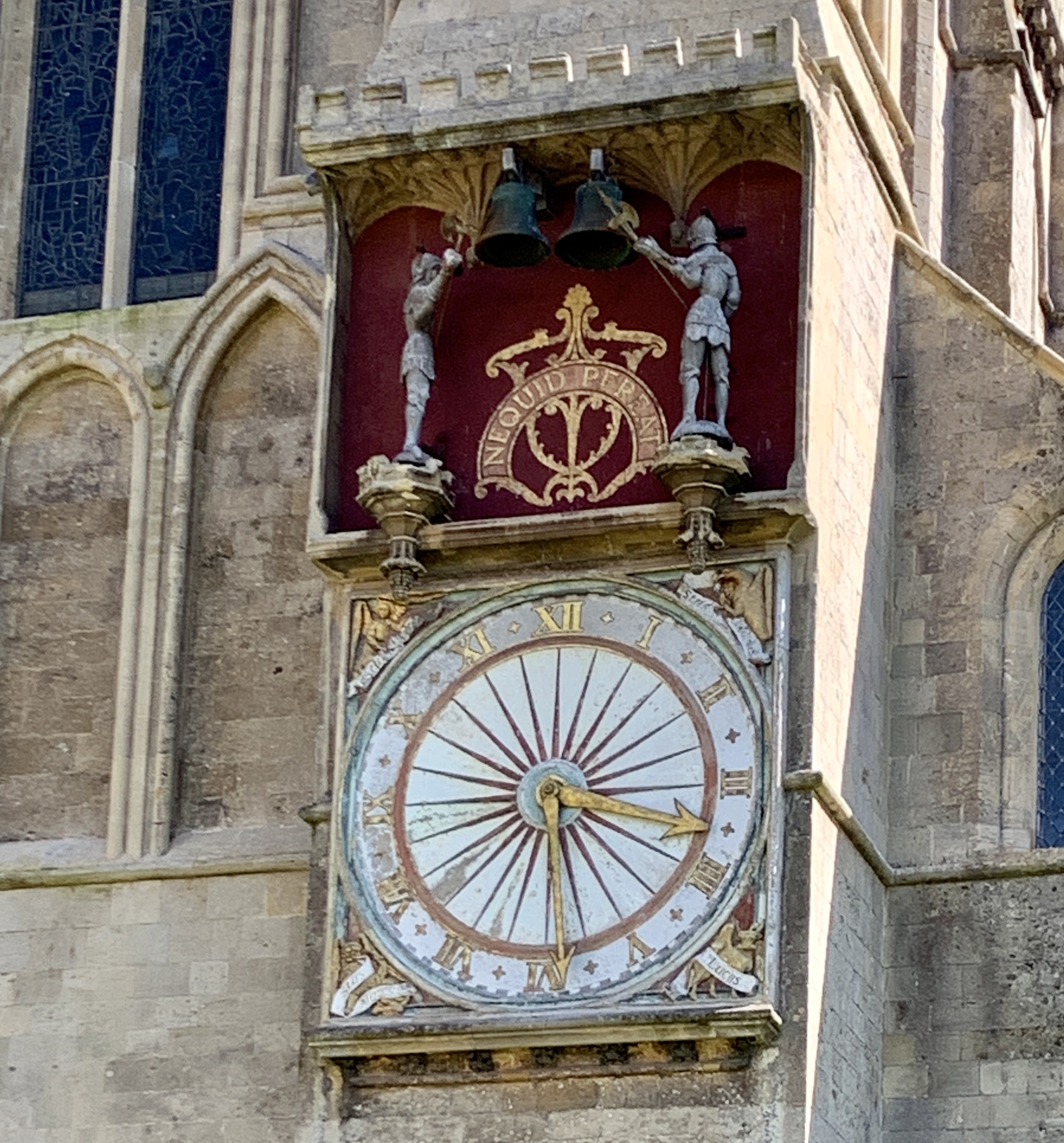
Clocks
A bell rings on the quarter hour, and the knights emerge to joust each other.
Stained glass
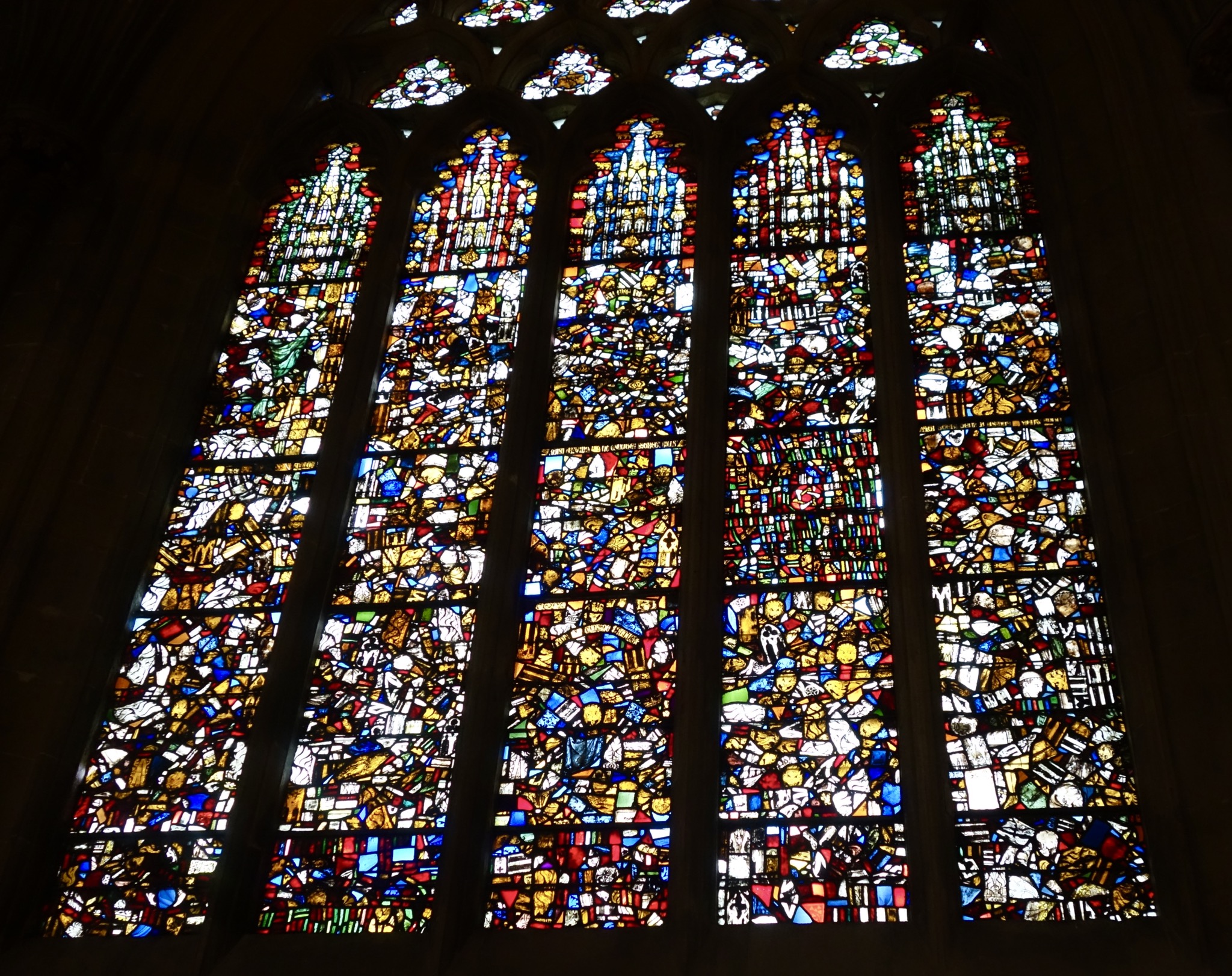
Wells Cathedral is unusual in having several original or near-original windows, such as the Jesse Window. But they have also made the best of fragments scattered in centuries past, such as in this artful collage.
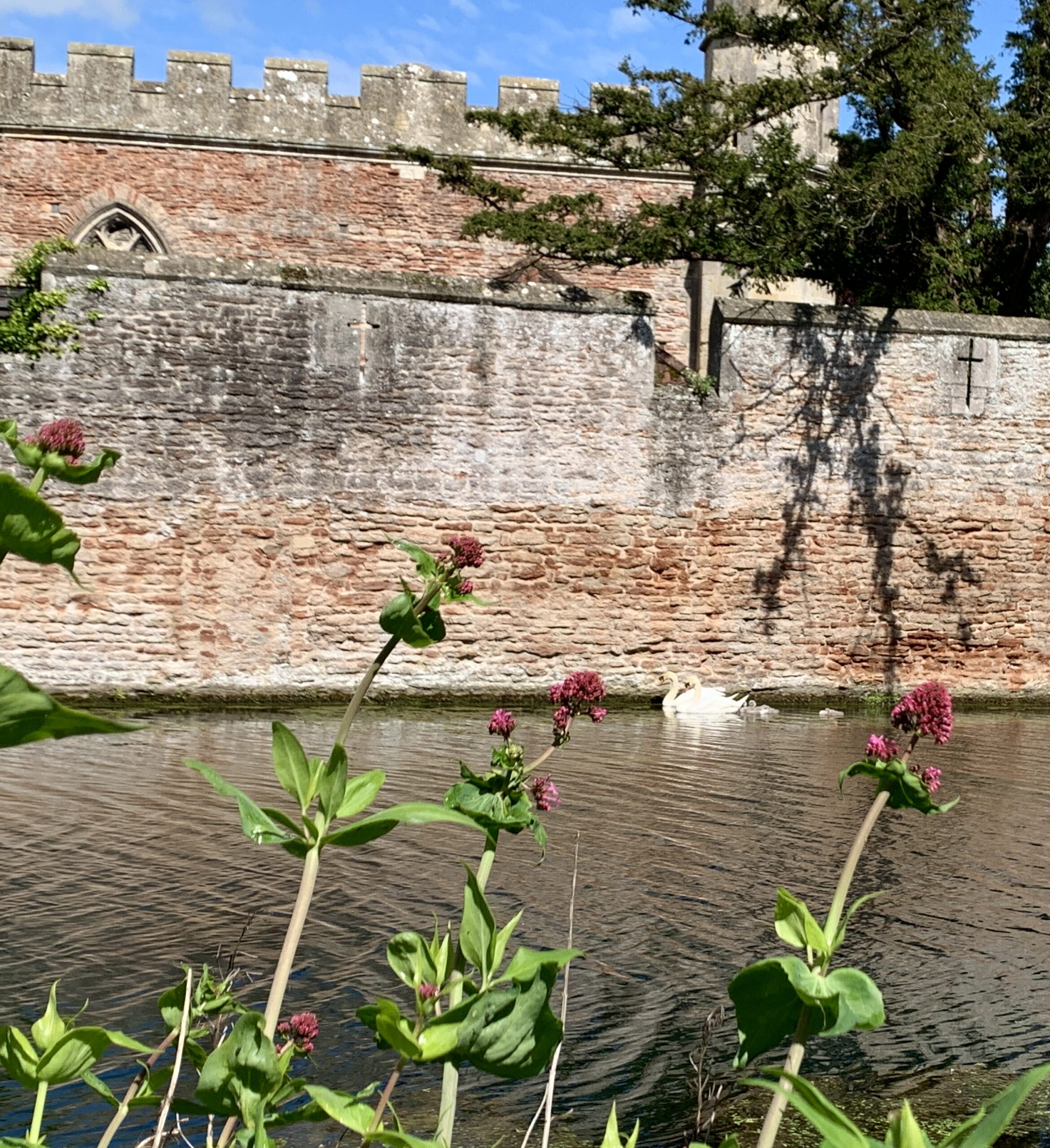
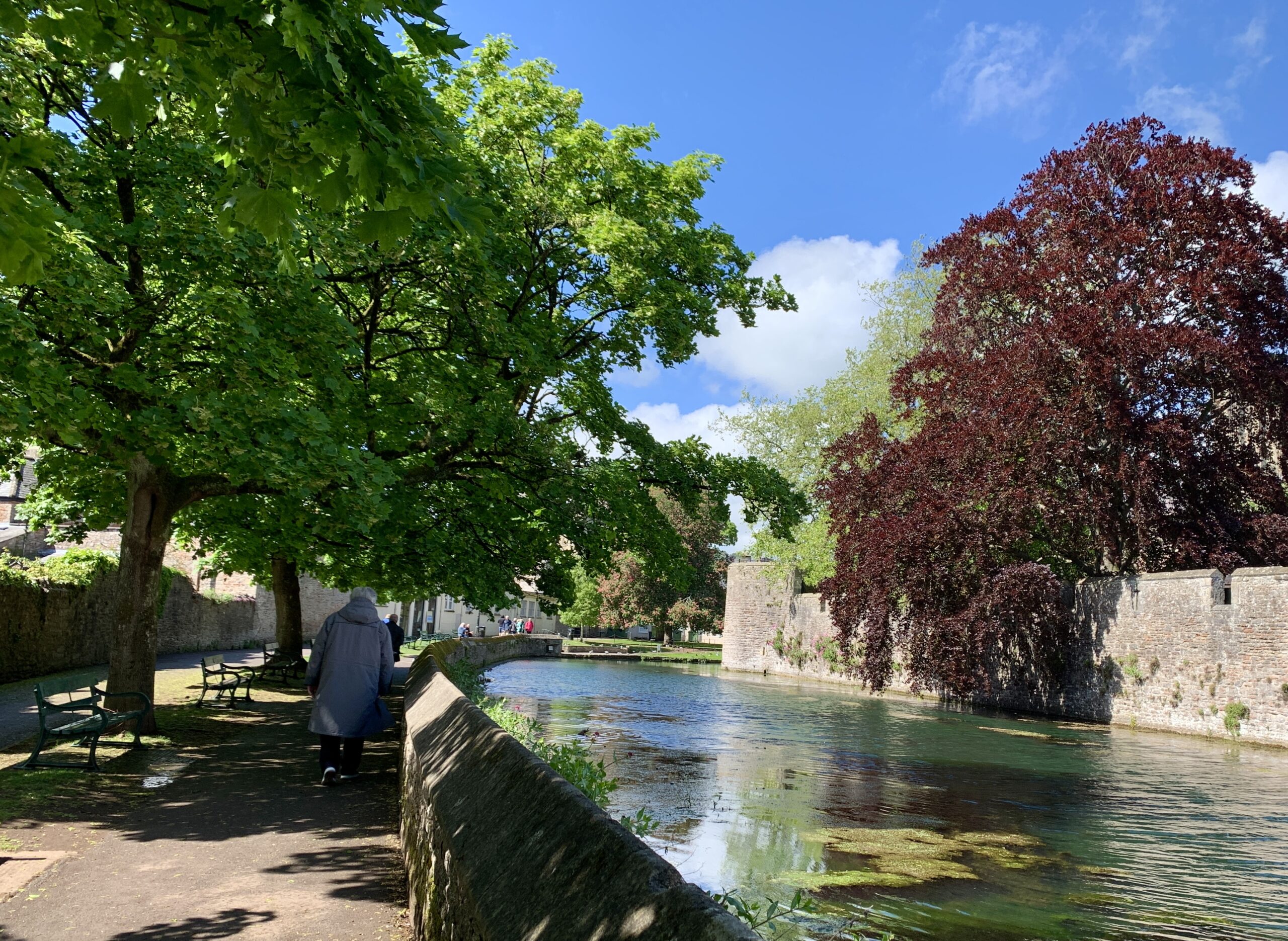
The Bishop’s Palace
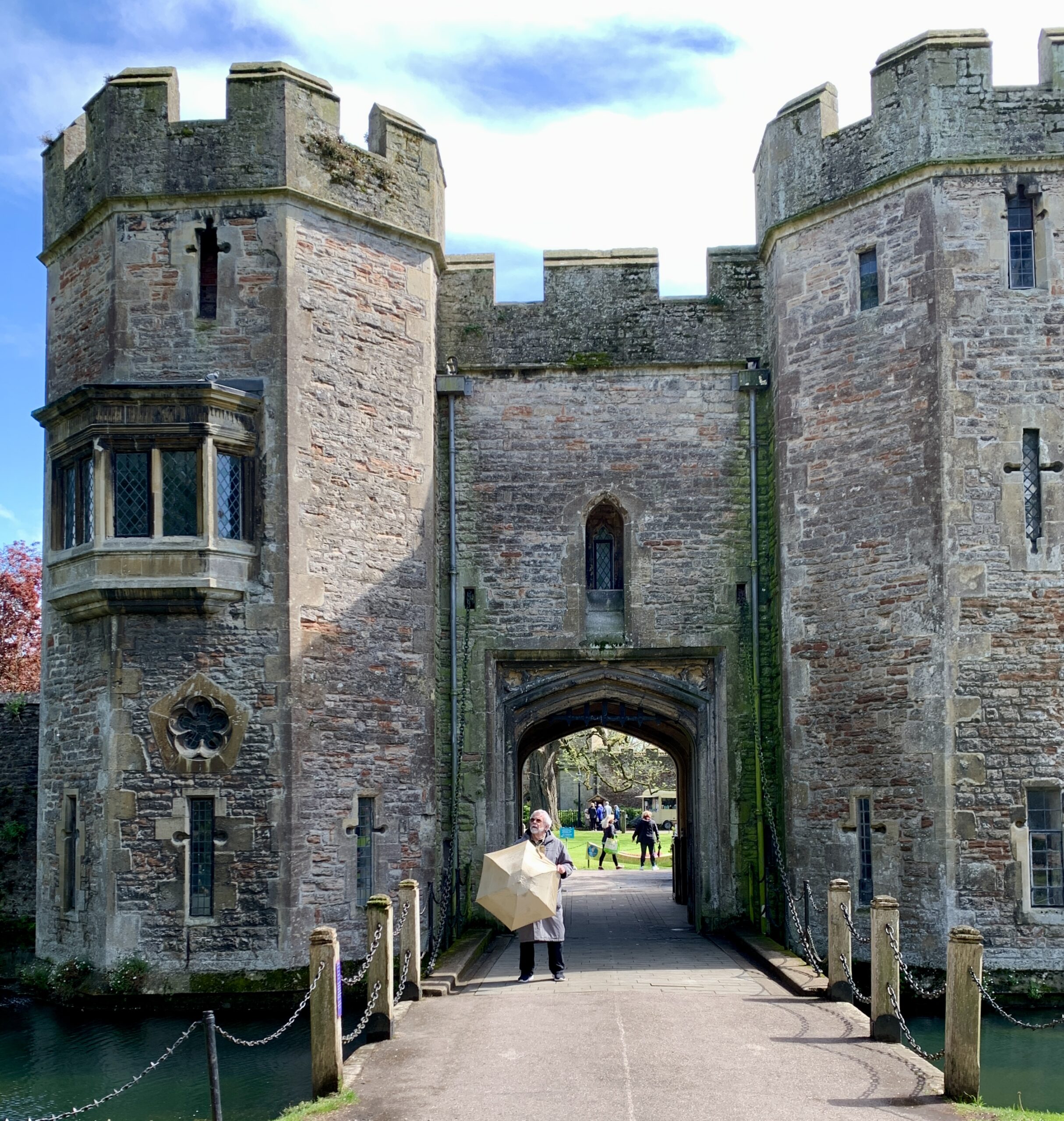
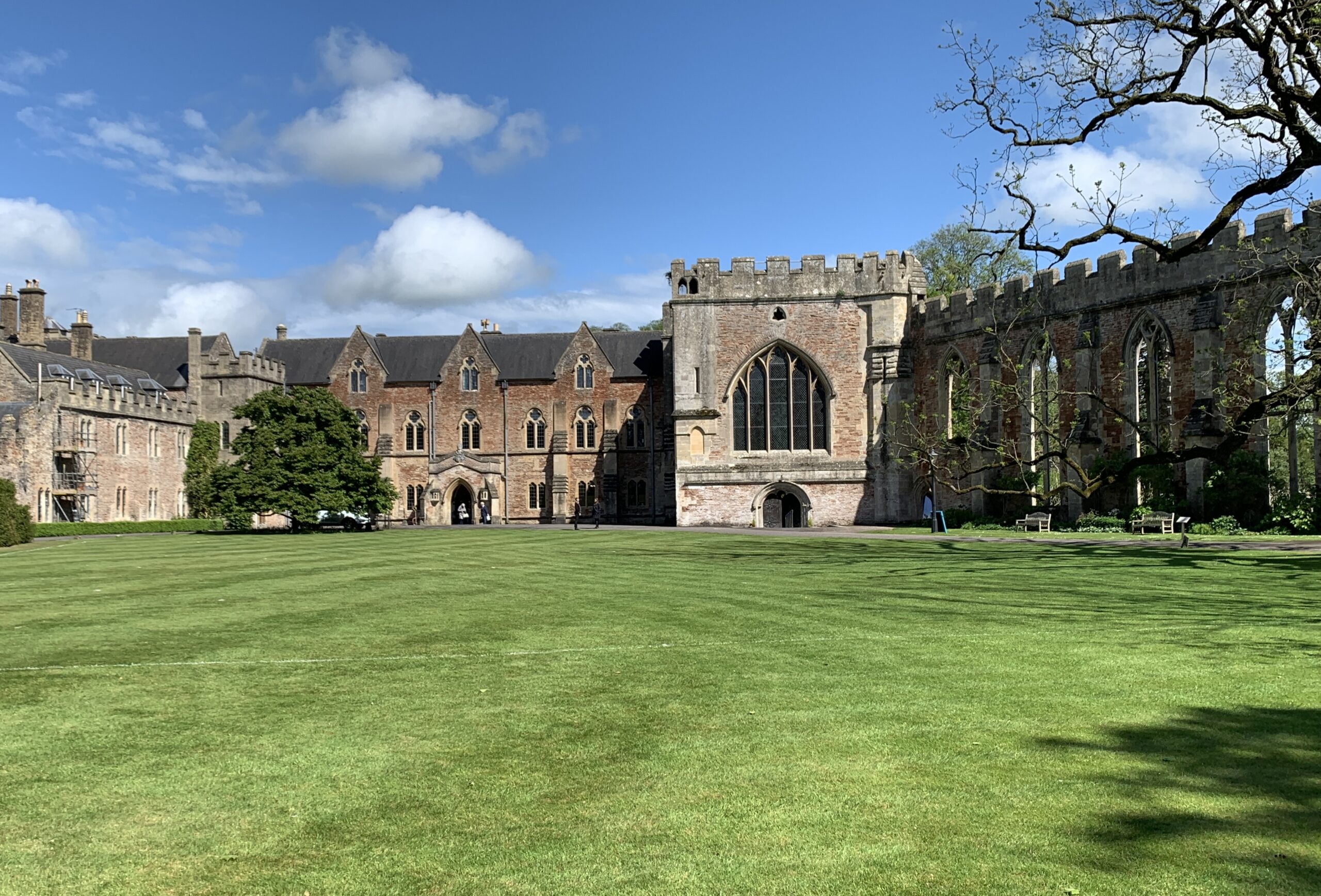
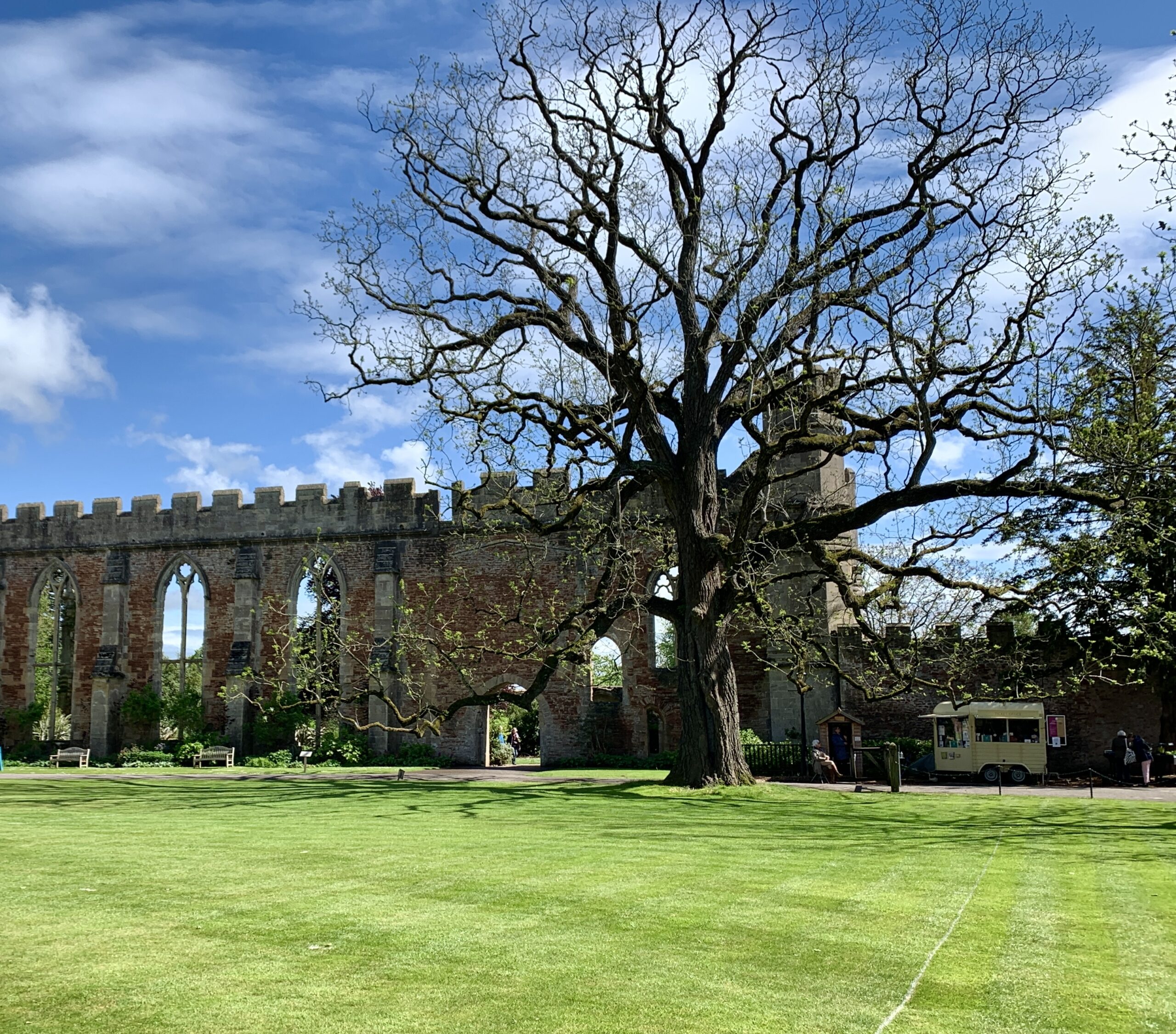
We forwent the chance to visit inside, but enjoyed our stroll around the grounds, the day having turned mild and sunny. Two of the wells after which the town is named are within the compound.
If you’d like to see or learn more, the Wikipedia article on Wells Cathedral has many lovely photos of aspects I was not able to shoot, especially of the famed exterior with its wealth of statuary. There is also a brief, informative YouTube tour of the cathedral. If you’re ever in Bath, make the day trip to Wells–hopefully in drier weather than we had.
Dinner with family
We were delighted to meet up with nephew Tony and his family for dinner in Bath.