Thoughts inspired by a visit to Culloden Battlefield
Scotland is another country. Though it obviously shares much in common with England, one does feel as though one has traveled somewhere else. At least, this one did. I love Scotland and hope to make a return trip to the Highlands and the Islands.
But I cannot abide Bonnie Prince Charlie.
The Jacobite/Bonnie Prince Charlie stuff bemuses and annoys. Its persistence is surely abetted by its commemoration in sentimental songs that were composed in the 19th-century—rather than the 18th-century, the time of the events. They are lovely songs drenched in yearning for an idealized past, perfect for singing late night after and with a wee dram or twa.
- Will ye no come back again (ca 1800. lyrics and tune by Carolina Oliphant )
- The Skye Boat Song, a lullaby that Richard remembers his mother singing. (Ca 1880, lyrics by Sir Harold Edwin Boulton; traditional tune.) RL Stevenson wrote better lyrics.*
Such sentiment resembles the lost cause fantasies of the American South, and perhaps there is a cultural trait that accounts for it – or just the ordinary refusal to deal with reality and the desperate need to cling to a fantasy that makes one’s own tribe, whatever its failings, appear noble.
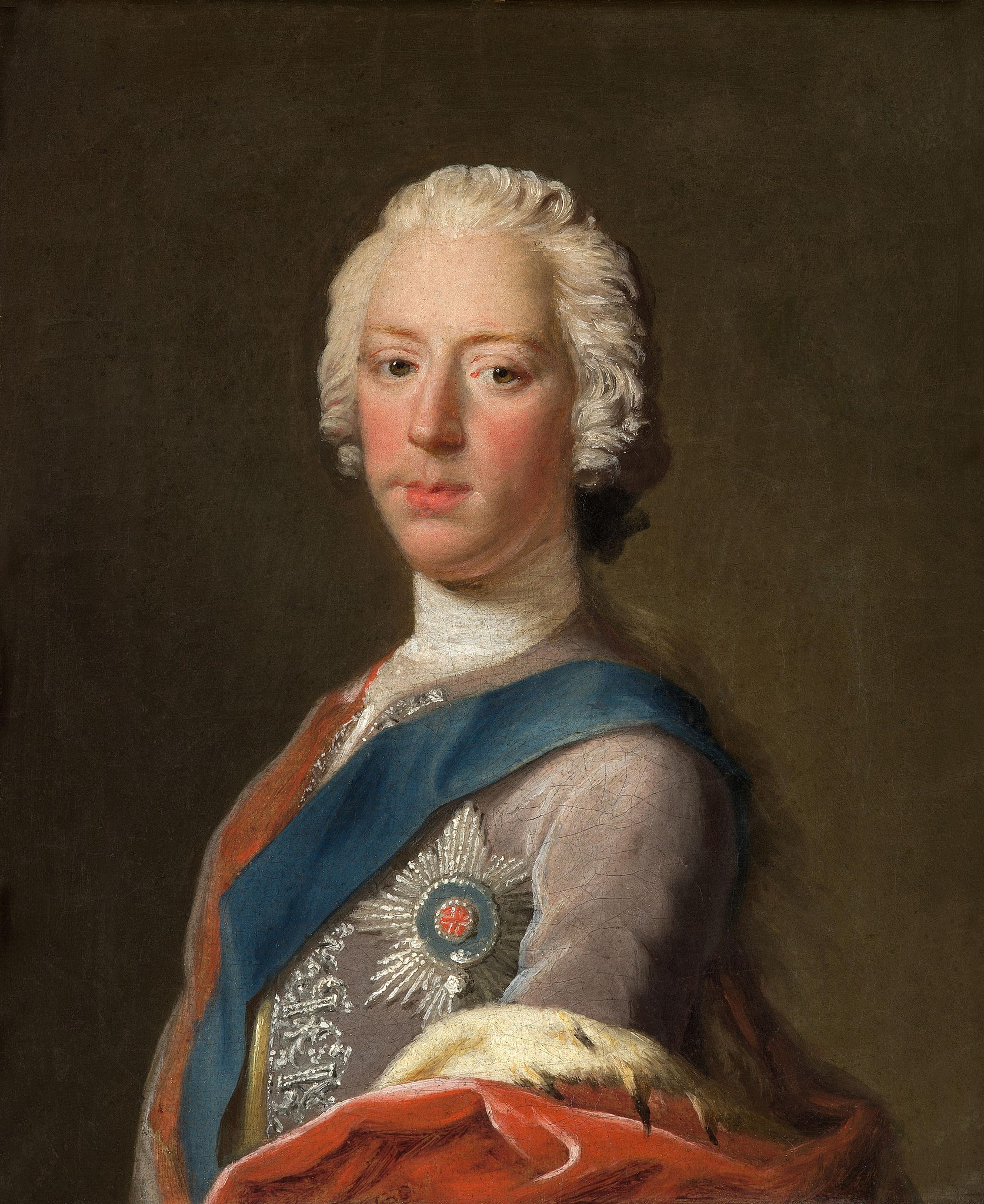
From what I can tell (and I have to acknowledge that I am no expert on this period of history, though I have read up a lot recently), the Scottish Lairds who originally encouraged Charles in the uprising were delusional blowhards, scarcely Bravehearts. They had originally promised Charles Edward Stuart 20,000 troops, an astonishing number and at least four times what they could actually muster, and that with the help of the French.
At the end, despite his repeated avowals of being willing to die in Scotland, Charlie ran away (will ye no come back again, indeed!), and his subsequent life as an argumentative tosspot did not inspire admiration. Even the Pope gave up on him.
Once again, the lesson is, in the words the poet, “don’t follow leaders, watch your parking meters.”
And the sentiment arises from the need of some people to be told what to do. Democracy is difficult, and its machinery had not been worked out in the mid-18th century, so you can’t really blame the people of that time for seeing the Stuarts as an alternative to the Electors of Hanover.
But you would think that modern people would know better. Does anyone really believe that the old clan system with its constant squabbles and battles was an improvement over the relative stability of the English monarchy, particularly the limited monarchy created by the Glorious Revolution?
The greed and vanity of the Stuarts must undercut any adulation, one would think. Again, in the words of another poet:
Poor man wants to be rich,
Rich man wants to be King,
And the king ain't satisfied
Until he rules everything.
. . . . . . . . . . . . . . . . . .
My great-grandfather Daniel McCue (1845 – 1932) is reported to have forbidden Campbell’s Soup in the house. (The Campbells, prosperous and Protestant, opposed the Jacobites and worked with British troops to defeat them.)
I do not know if that is some bit of family tradition handed down from the Highland Clearances or simply an affectation of his, as I have observed in his answers to the Census that he changed stories often. Considering that he was completely orphaned by the age of six and raised by his brothers, he may have gotten conflicting or romanticized tales of his family’s heritage.
However, the best that I can ascertain is that his father, John McCue (ca 1797-1850), emigrated from Northern Ireland around 1819. It is certainly possible that John’s grandparents fled Scotland after the battle of Culloden, as did many Highland Scots, and settled in Ireland for a generation or two. But I have no evidence one way or the other: just the resentment.
*Stevenson’s poem
Robert Louis Stevenson’s 1892 poem, which has been sung to the same, traditional tune, has the following text, which preserves nostalgic yearning without Jacobite nonsense:
Chorus: Sing me a song of a lad that is gone,
Say, could that lad be I?
Merry of soul he sailed on a day
Over the sea to Skye.
1. Mull was astern, Rum on the port,
Eigg on the starboard bow;
Glory of youth glowed in his soul;
Where is that glory now?
Chorus
2. Give me again all that was there,
Give me the sun that shone!
Give me the eyes, give me the soul,
Give me the lad that's gone!
Chorus

3. Billow and breeze, islands and seas,
Mountains of rain and sun,
All that was good, all that was fair,
All that was me is gone.